
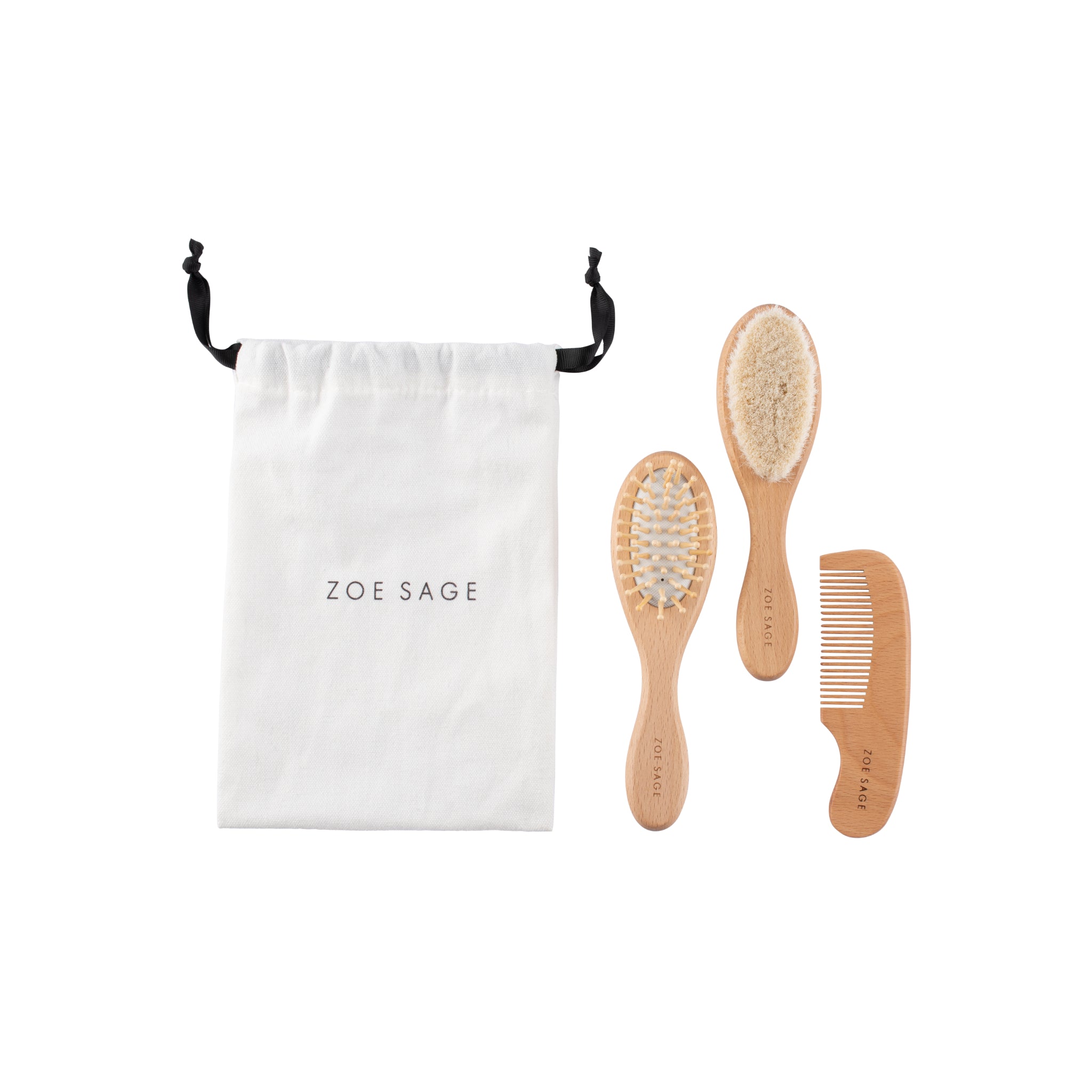


Baby hair care looks simple until you're wrestling a wriggling newborn with a scratchy comb. Babies have thin, sensitive skin and fine hair that snags, tangles, or gets irritated fast. The right tool makes the whole process calmer for both of you. A gentle bamboo comb is one of the easiest upgrades you can make to your daily routine.
Why Bamboo Combs Are Kinder on Little Scalps
Plastic combs often have rough seams left over from the moulding process. Those tiny ridges drag across a baby's scalp and cause unnecessary friction. Bamboo is finished smoother, so the teeth glide through fine hair without catching. It also feels warmer to the touch than plastic, which matters when you're working on a sensitive scalp.
Bamboo is naturally lightweight. For a baby who is already unsure about having their head touched, a lighter comb feels less intrusive. Wide-set teeth are the other thing to look for. Narrow teeth pull at fine baby hair. Wide teeth separate it gently without tugging at the roots.
How to Use a Bamboo Comb Without Upsetting Your Baby
Timing matters more than technique. Try combing after a bath when hair is slightly damp and easier to manage. Dry hair on a newborn can be wispy and static-prone, which makes any comb feel rougher than it is.
Start at the ends, not the roots. Even on very short baby hair, working from the tip upward avoids pulling at the scalp. Use slow, light strokes. There is no need to press down. The weight of the comb does the work.
If your baby has cradle cap, a bamboo comb with rounded, wide teeth can help loosen flakes gently before or after washing. Do not force flakes off. Let the comb glide across the scalp lightly. For persistent or inflamed cradle cap, check in with your GP or child health nurse. The Raising Children Network has straightforward guidance on managing cradle cap at home.
Caring for a Bamboo Comb So It Lasts
Bamboo is a natural material, so it needs a little more care than plastic. Rinse it after use and dry it promptly. Do not leave it sitting in water or in a damp cup. Prolonged moisture can cause bamboo to swell or splinter over time, and a splintered comb has no place near a baby's scalp.
Every few weeks, run your finger along the teeth to check for any rough edges. If you feel a snag, retire the comb. Baby tools are not expensive to replace, and a smooth finish is the whole point.
Store the comb somewhere it can air dry between uses. A small tray on the change table or a hook near the bath works well. Keeping it in an enclosed bag while still damp shortens its life.
What to Look for When You Buy
- Wide, rounded teeth with no sharp tips
- A smooth finish with no visible seams or ridges along the teeth
- Lightweight construction, easy to hold in one hand while the other steadies your baby
- A size that fits comfortably in your palm, not too long or too wide
- Natural or food-safe finishes only, no synthetic lacquers near sensitive skin
If your baby has eczema-prone or reactive skin, the material touching their scalp is worth thinking about just as carefully as the fabrics touching their body. For more on choosing gentler materials for sensitive skin, this article on whether organic baby clothes are better for sensitive skin covers the fabric side of the conversation. And if you are looking for breathable, soft sleepwear to go alongside a calmer grooming routine, our bamboo zippered rompers and sleepwear for sensitive skin are a good place to start.
Building a Simple Baby Hair Care Routine
You do not need a full shelf of products. A gentle shampoo used two to three times a week, a soft bamboo comb, and a consistent post-bath routine covers most babies well. Wash with lukewarm water, towel dry gently by patting rather than rubbing, and comb while the hair is still slightly damp.
For newborns with very little hair, a soft-bristle brush often works better than a comb. As hair grows thicker and longer over the first year, a wide-tooth bamboo comb becomes more useful. Many families end up using both side by side.
The Raising Children Network is a reliable resource for newborn care basics if you want broader guidance on bathing and grooming routines in the early weeks.
Keep the routine calm and consistent. Babies who have their hair combed regularly from early on tend to tolerate it better over time. A smooth tool, a steady hand, and a familiar routine make a bigger difference than any product on its own.