

Searching for organic baby swaddles online in Australia and hitting a wall of vague fabric claims and confusing certifications? This guide cuts straight to what matters. You will find everything you need to choose the right wrap for your newborn, and understand why the fabric closest to their skin deserves careful thought.
Why Organic Cotton Matters for Newborn Skin
Newborn skin is thinner and more permeable than adult skin. It absorbs what it touches. A swaddle wrap sits against your baby for much of the day and night, so the fabric choice genuinely matters.
Conventional cotton is one of the most heavily sprayed crops in the world. Organic cotton is grown without synthetic pesticides or fertilisers, and certified organic fabric goes through processing that avoids harsh chemical finishes. For sensitive newborn skin, that difference is real.
Look for GOTS (Global Organic Textile Standard) or OEKO-TEX STANDARD 100 certification on any wrap you buy. GOTS covers the entire supply chain from field to finished product. OEKO-TEX certifies that the finished fabric has been tested and is free from harmful substances. Either label gives you independent verification, not just a marketing claim.
Muslin vs Woven Organic Cotton: What Actually Differs
Most organic baby swaddles in Australia fall into two categories: open-weave muslin and tighter-woven jersey or plain-weave cotton. Each suits different situations.
Organic Muslin Wraps
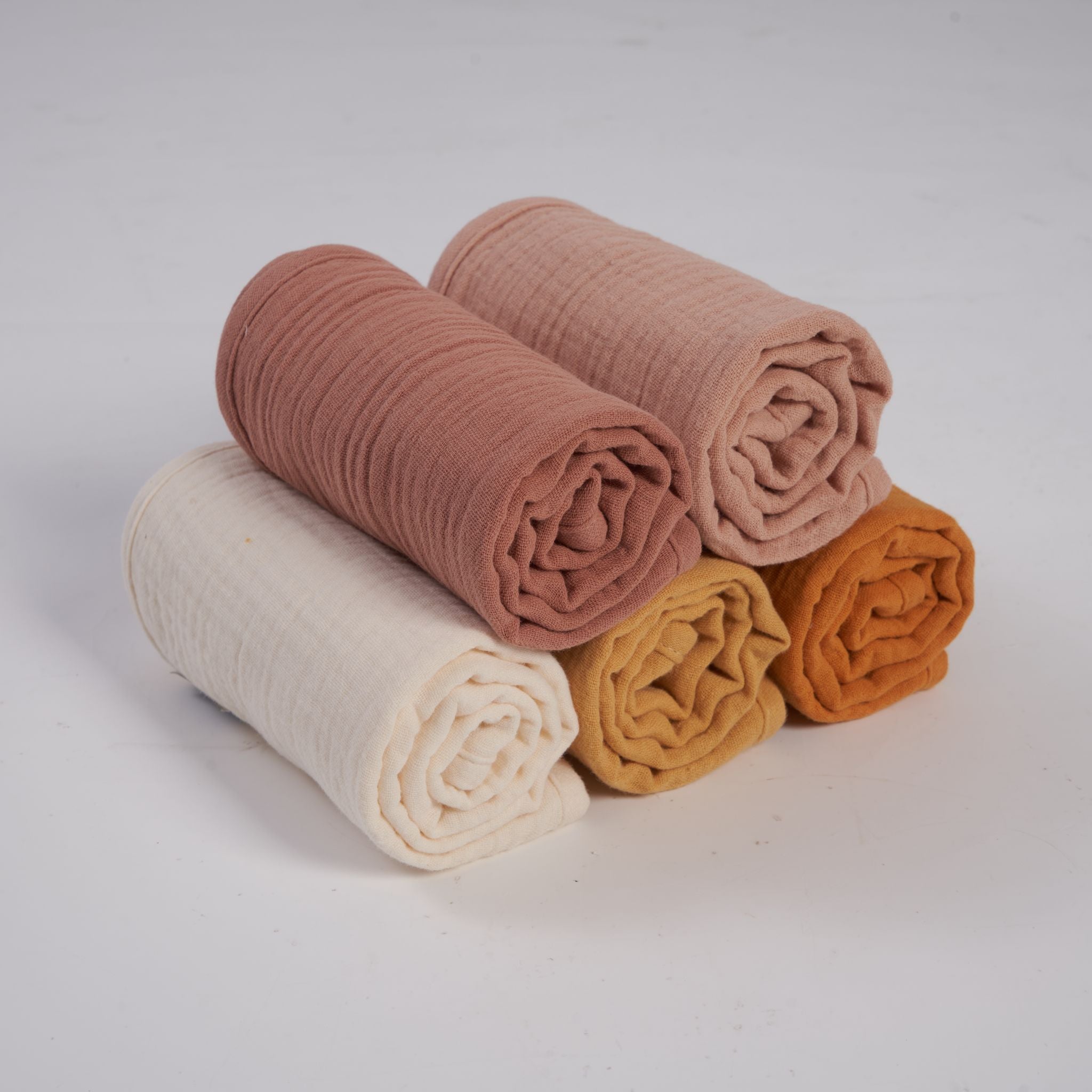
Muslin is a loose, breathable weave that gets softer with every wash. It is lightweight, which makes it easy to layer and easy to adjust. Muslin is the wrap style recommended by Red Nose Australia for safe swaddling. It allows heat to escape, which matters for keeping your baby comfortable without overheating. Our organic muslin wrap collection is made from GOTS-certified cotton and sized generously so you have enough fabric to wrap securely.
If you want a deeper look at how muslins compare across brands and what to look for in a quality wrap, our muslin wraps buying guide walks through it in detail.
Woven and Jersey Organic Cotton
A tighter weave or stretchy jersey gives more structure. Some parents find it easier to get a firm wrap with a fabric that has a little give. The trade-off is that thicker fabric holds more warmth, so you need to account for that when dressing baby for sleep.
Safe Swaddling: What You Need to Know
A wrap is only useful if it is used safely. Red Nose Australia has clear guidance on wrapping, and it is worth reading their full recommendations at rednose.org.au before you start.
The key points are:
- Use a lightweight cotton or muslin wrap. Avoid thick or padded fabrics that trap heat.
- Wrap firmly but not tightly. You should be able to slide a hand between the wrap and your baby's chest.
- Hips and legs must be able to move freely. Wrapping legs straight and rigid can contribute to hip dysplasia.
- Always place a wrapped baby on their back to sleep.
- Stop wrapping at the first signs of rolling, or at 3 months, whichever comes first. Red Nose is clear on this.
- Keep baby's head and face uncovered at all times.
Not sure which wrapping technique actually works? Our article on the swaddle methods that hold through the night covers the most reliable approaches honestly.
Dressing Baby Correctly Under a Swaddle
Room temperature is one of the things parents worry about most. Red Nose does not recommend a specific room temperature range for safe sleep, because the evidence does not support a single number. What matters is how you dress your baby for the conditions in the room.
A practical approach: dress baby as you would dress yourself for that room. Feel their tummy or back to check their comfort. Cool hands and feet are normal and not a cause for concern. If their tummy or back feels hot, sweaty or clammy, remove a layer. Keep their head and face uncovered during sleep at all times.
A lightweight muslin swaddle works well here because it adds minimal warmth on its own, giving you more flexibility to adjust clothing underneath.
What to Look For When Buying Online
Australia has no shortage of brands selling organic baby wraps, but the quality varies significantly. Here is what to check before you buy:
- Certification mark on the product page, not just on the brand homepage. GOTS or OEKO-TEX STANDARD 100 should be visible.
- Fabric weight listed in GSM (grams per square metre). For muslin wraps, 70 to 100 GSM is a reliable breathable weight.
- Size. A wrap that is too small makes safe swaddling much harder. Look for at least 120 x 120 cm.
- Washing instructions. Organic cotton should be machine washable and should soften, not roughen, over time.
- Transparent manufacturing information. Where is it made, and who makes it?
If you are also considering options for New Zealand or comparing wrap styles across different brands, our piece on angel swaddles versus muslin wraps is a useful read before committing.
Browse our certified organic swaddle wraps to see fabric details, certifications and sizing in one place. Free shipping applies to all Australian orders.