

A newborn at 6 weeks is still very much in the fourth trimester. Sleep feels unpredictable, wake windows are short, and settling can take longer than you expect. That is completely normal. This guide explains what is actually happening with your baby's sleep in these early weeks and gives you practical, realistic ways to support it.
What to Expect from Newborn Sleep in the First 6 Weeks
Newborns are born with high levels of maternal melatonin, which makes them extra drowsy in the first few days. After that, their sleep becomes more fragmented and demand-driven. Most newborns sleep between 14 and 17 hours in a 24-hour period, but rarely for more than 2 to 3 hours at a stretch.
At around 6 weeks, many babies go through a growth spurt and a developmental leap. Feeding frequency often increases. Settling takes more effort. This is not a sign that something is wrong. It is a sign that your baby is growing.
According to Raising Children Network, newborns do not develop a regular sleep-wake cycle until around 3 to 6 months. Until then, short and irregular sleep is biologically expected.
How to Help a 6 Week Old Baby Sleep
There is no trick that works every time, but these approaches are grounded in how newborns actually function.
Watch for tired cues early
At this age, wake windows are very short. Most newborns can only handle 45 to 90 minutes of awake time before they need to sleep again. Look for yawning, glazed eyes, turning away from stimulation or a subtle change in mood. Acting on these cues early makes settling much easier.
Overstimulation is one of the most common reasons newborns struggle to settle. If your baby is arching, crying intensely or refusing to feed, a calmer environment often helps more than additional stimulation. You can read more about managing overstimulation and building a calming routine in our detailed guide.
Use swaddling to support sleep
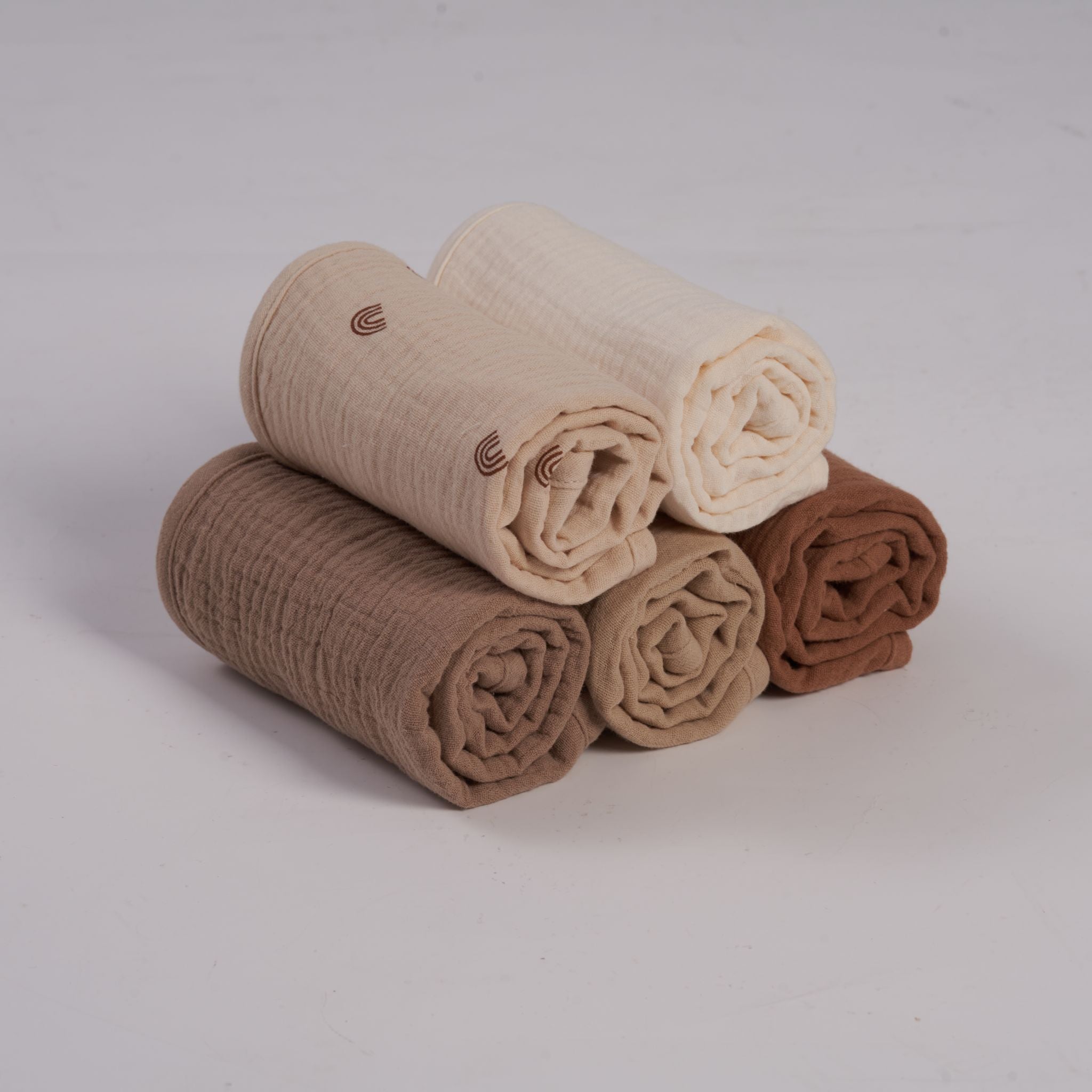
Swaddling mimics the snug feeling of the womb and helps reduce the startle reflex that wakes so many newborns. A stretchy wrap or swaddle blanket made from breathable fabric is ideal, especially in the warmer Australian climate.
Bamboo wraps are a popular choice because the fabric is soft, moisture-wicking and regulates temperature well. If you are looking for options, our guide to buying bamboo swaddles in Australia covers what to look for and how to use them safely.
Always swaddle with the hips loose and the wrap not too tight across the chest. For safe swaddling guidelines, refer to Red Nose Australia's wrapping guidelines.
Build a simple pre-sleep routine
Routines do not need to be long or complicated at this age. A consistent 10 to 15 minute sequence before each sleep helps signal to your baby that rest is coming. This might include a feed, a gentle nappy change, dimming the lights, swaddling and a short period of calm holding or rocking.
Consistency matters more than timing at 6 weeks. The sequence is the cue, not the clock.
When Your Baby Only Sleeps in Your Arms
Many newborns settle quickly when held and wake the moment they are put down. This is developmentally normal. Your baby spent 9 months in a warm, moving environment and contact is genuinely comforting and regulating for them.
If you are finding the constant holding unsustainable, there are practical strategies that can help. Our article on babies who will only sleep when held walks through realistic approaches for transitioning to independent sleep without leaving your baby to cry.
Safe Sleep Basics to Keep in Mind
Every sleep conversation for a newborn needs to include safety. Red Nose Australia recommends the following for every sleep:
- Place baby on their back to sleep, every time
- Use a firm, flat and well-fitted mattress
- Keep the sleep environment clear of pillows, loose blankets and soft toys
- Room-share without bed-sharing for at least the first 6 to 12 months
- Keep the room at a comfortable temperature, around 16 to 20 degrees Celsius
These guidelines apply to every sleep, day and night.
What to Pack in Your Settling Kit
Having the right items close by makes settling faster and less stressful. The basics that most parents rely on in the first 6 weeks include a quality swaddle wrap, a white noise source, a firm safe sleep surface and a dummy if your baby takes one.
Browse our curated sleep essentials collection for swaddles, wraps and accessories chosen with the newborn stage in mind.
The first 6 weeks are genuinely hard. But they are also finite. Understanding your baby's biology, keeping the environment calm and having reliable tools on hand makes a real difference to how you both get through it.