TOG Rating Guide: What to Dress Your Baby In for Sleep
If you have ever stood over the cot at 9pm wondering whether your baby is too hot, too cold, or somewhere in between, you are not alone. It is one of the most common worries in those first months. TOG ratings exist to take the guesswork out of it, and once you understand what the number means, dressing your baby for sleep becomes a lot simpler.
What does TOG actually mean?
TOG stands for Thermal Overall Grade. It is a measure of how much warmth a fabric holds in, so the higher the number, the warmer the item. It is the standard used for baby sleeping bags and sleepwear, and it lets you match what your baby wears to the temperature of the room they are sleeping in.
In practice, most families only need to know two or three:
- 0.2 to 0.5 TOG. Very light. For warm summer nights and hot climates.
- 1.0 TOG. The all rounder. Suits most Australian rooms in spring and autumn.
- 2.5 TOG. The warm one. For winter and cooler rooms.
- 3.5 TOG. Extra warm, for genuinely cold rooms without heating.
The Zoe Sage dressing guide
This is the chart we get asked for most. Find the temperature of your baby's room down the top, then read across to see what to wear under each TOG sleeping bag.
| Sleeping bag | 14°C | 16°C | 18°C | 20°C | 22°C | 24°C | 26°C |
|---|---|---|---|---|---|---|---|
| 1.0 TOGspring and autumn | – | – | Long sleeve romper + short sleeve bodysuit | Long sleeve romper | Short sleeve bodysuit | Sleeping bag only | – |
| 2.5 TOGwinter | Long sleeve romper + short sleeve bodysuit | Long sleeve romper | Short sleeve bodysuit | Sleeping bag only | – | – | – |
Swipe the table sideways to see all temperatures
A dash simply means that combination is not one we would suggest. If your room sits at 26°C or above, a very light 0.2 to 0.5 TOG bag or just a nappy and a singlet is usually plenty.
How to tell if your baby is actually too hot or too cold
Hands and feet are the wrong place to check. Babies often have cool hands and feet even when they are perfectly warm, which is why so many of us over dress them.
- Feel the chest or the back of the neck. It should feel warm and dry, not hot, clammy or sweaty.
- Signs of overheating include damp hair, a flushed face, rapid breathing or a sweaty back. If you see these, remove a layer.
- If the chest feels genuinely cool, add one light layer rather than a heavier bag.
Overheating carries more risk than being slightly cool, so when you are unsure, dress a little lighter.
Choosing a TOG for the Australian seasons
Australian homes vary enormously, so the room thermometer matters more than the month on the calendar. As a starting point:
- Summer. A 0.2 to 0.5 TOG bag, or a muslin wrap for a newborn. In a hot, unairconditioned room, a nappy and a singlet under a very light bag is often enough.
- Spring and autumn. A 1.0 TOG bag is the workhorse for most rooms sitting between 18 and 24°C.
- Winter. A 2.5 TOG bag for rooms from 14 to 20°C. If the heating runs overnight, check the room again once it has warmed up, because heated rooms often sit warmer than parents expect.
A simple room thermometer is the single most useful thing you can add to a nursery. It turns this whole question into a five second check.
What about newborns and wraps?
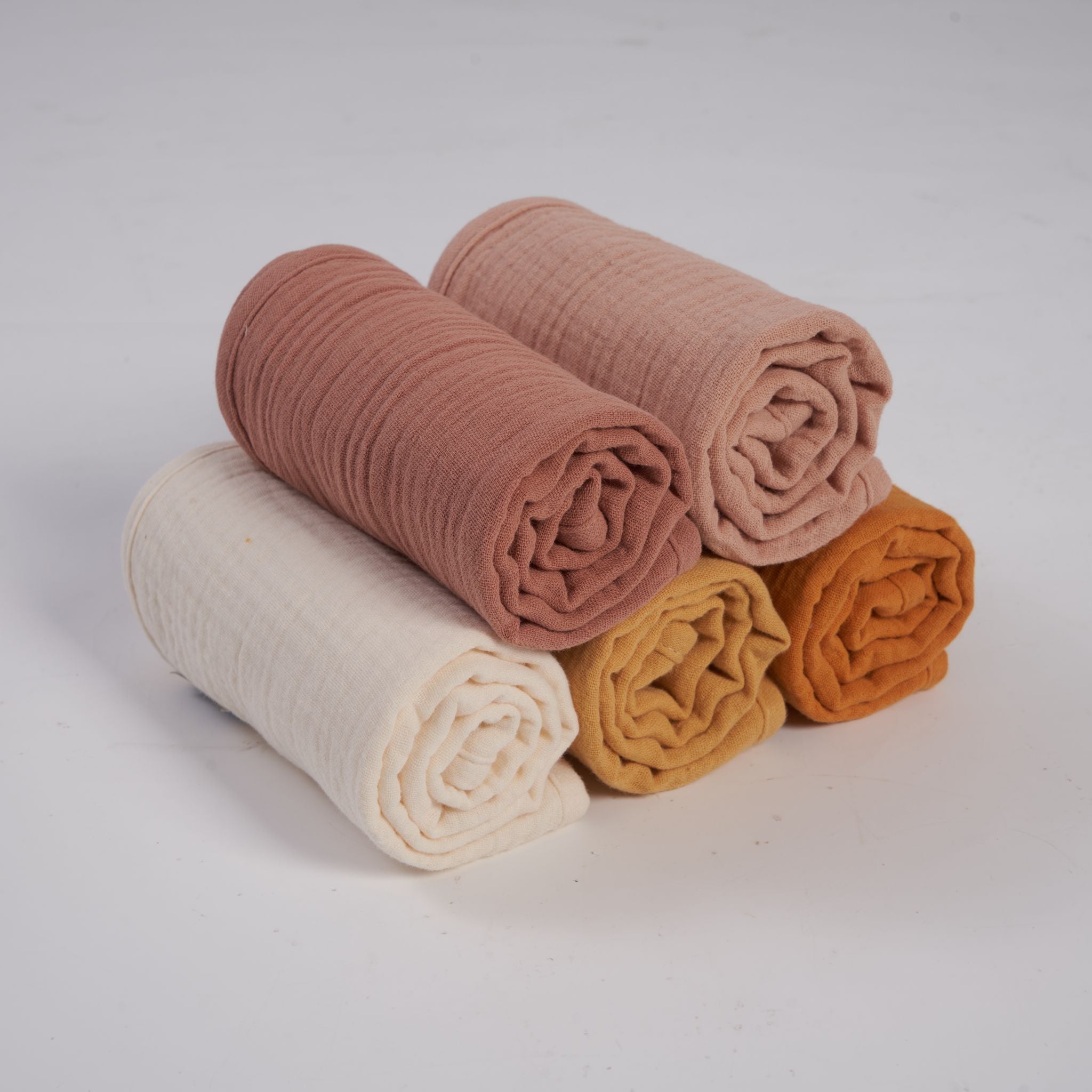
Many newborns start in a wrap rather than a sleeping bag. A lightweight organic muslin wrap is breathable and easy to layer, and a stretchy swaddle gives a snugger fit for those early weeks. The same principle applies: dress for the room, keep the head and face uncovered, and check the chest rather than the hands.
Wrapping is for the newborn stage only. Once your baby shows any sign of rolling, it is time to stop wrapping the arms and move to a sleeping bag instead. Red Nose has clear guidance on when and how to stop, so follow that and your child health nurse rather than a fixed age.
Fabric matters as much as the number
Two bags with the same TOG can feel quite different depending on what they are made from. Breathable natural fibres like organic cotton and bamboo help regulate temperature and move moisture away from the skin, which is why they suit our climate so well. Our organic baby sleepwear is chosen with exactly that in mind, and you will find the full range of sleep essentials in The Sleep Edit.
Breathable organic sleepwear, wraps and nursery essentials, chosen for Australian rooms.
Shop The Sleep Edit Shop organic sleepwearFrequently asked questions
What TOG sleeping bag should I use in winter in Australia?
A 2.5 TOG bag suits most rooms sitting between 14 and 20°C. Layer a long sleeve romper underneath at the cooler end, and use the bag on its own at around 20°C. Always check the room temperature rather than the season, especially if you run heating overnight.
What does TOG mean on a baby sleeping bag?
TOG stands for Thermal Overall Grade and measures how much warmth the fabric holds in. The higher the number, the warmer the bag. Most families use 1.0 TOG for spring and autumn, 2.5 TOG for winter, and a very light 0.2 to 0.5 TOG for summer.
What should my baby wear under a 1.0 TOG sleeping bag?
At around 18°C, a long sleeve romper with a short sleeve bodysuit underneath. At 20°C, a long sleeve romper. At 22°C, a short sleeve bodysuit. At 24°C, the bag on its own is usually plenty.
How do I know if my baby is too hot?
Feel their chest or the back of the neck rather than their hands and feet, which are often cool even when a baby is comfortably warm. Warm and dry is right. Damp hair, a flushed face, sweating or rapid breathing mean you should remove a layer.
What room temperature is best for a baby?
Red Nose does not recommend a specific room temperature. What matters is that your baby is dressed comfortably for the room they are in, with their head and face uncovered, sleeping on their back. Use the room temperature to decide what they wear, not the other way around.
Can I use a blanket instead of a sleeping bag?
A safe infant sleeping bag with fitted neck and armholes and no hood is generally recommended because it cannot ride up over the face. If you do use blankets, follow Red Nose guidance on tucking them in firmly and keeping them below the shoulders, and speak with your child health nurse if you are unsure.