

Choosing a baby blanket sounds simple until you're scrolling at midnight faced with dozens of options in every fabric, size, and price point. Not every blanket is made equal. The wrong choice means a frustrated baby, extra washing, and money wasted. This guide covers what NZ parents actually need to know before buying a quality baby blanket set.
What NZ Parents Should Look for in a Baby Blanket
New Zealand weather is changeable. A blanket that works in a warm Auckland summer is not the same one you need for a Christchurch winter. Versatility matters more than you might think.
Before buying, check these four things:
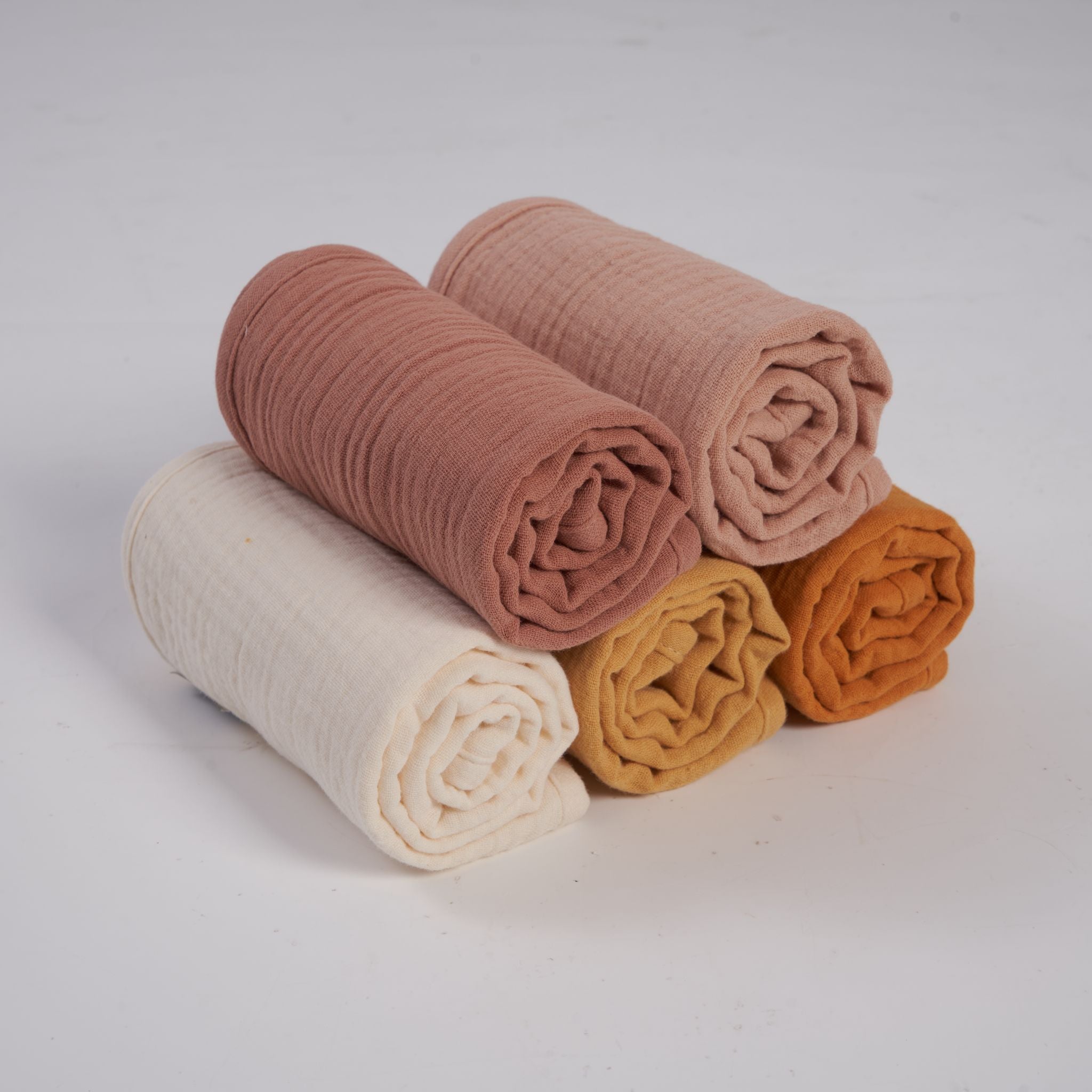
- Fabric. Muslin cotton and bamboo cotton blends are the most popular choices for good reason. They are soft against newborn skin, breathable, and moisture-wicking. Muslin gets softer with every wash. Bamboo blends feel silky and are gentle on sensitive skin. Avoid anything stiff or scratchy, especially in those first weeks.
- Size. A blanket that is too small is almost useless. Look for at least 100cm x 100cm for a swaddle wrap or pram blanket. Larger 120cm options give you more flexibility as baby grows.
- Weight. Lightweight is almost always the right call. A thin, breathable layer you can double up is safer and more practical than a heavy knit that traps heat.
- Washing durability. Baby blankets get washed constantly. Check that colours stay true after repeated washing and that fabric does not pill or lose its shape. Double-stitched edges and quality finishing are worth paying attention to.
Safe Sleep and Blankets: What You Need to Know
Blankets and safe sleep are two topics that belong in the same conversation. The short version: loose bedding in the sleep space carries risk for young babies. Red Nose Australia recommends keeping the sleep environment clear and free of loose items, with baby's head and face always uncovered during sleep.
For warmth during sleep, Red Nose recommends lightweight cotton or muslin wraps for young babies. Stop wrapping at the first signs of rolling or at 3 months, whichever comes first. Sleeping bags or sleep sacks can be used as baby grows, following the maker's TOG guide for the room.
To check if baby is warm enough, feel their tummy or back. Cool hands and feet are completely normal. If they feel hot, sweaty or clammy, remove a layer. Dress baby as you would dress yourself for the same room. You do not need a room thermometer to get this right.
No soft toys or comforters should be in the sleep space until at least 7 months. Red Nose prefers nothing in the sleep space for the first 12 months. For more detail on safe sleep, visit Raising Children Network.
Outside of sleep, blankets are genuinely useful. Pram covers, tummy time mats, nursing covers, play mats, and picnic layers are all fair game.
Why Sets Make More Sense Than Buying Separately
Buying a blanket as part of a set is almost always better value. Coordinated sets typically include a blanket and a topknot or headband, designed to work together in colour and fabric. You get a cohesive look without hunting for pieces that match, and the fabric quality tends to be consistent across the set.
Sets also make gifting easy. A well-packaged blanket and topknot set is one of the most practical and well-received baby gifts, because it is useful from day one and styled to photograph beautifully without any effort from tired new parents.
If you are choosing a blanket for different seasons, pairing a lighter muslin option with a slightly heavier cotton knit gives you two go-to layers for different conditions. For more detail on matching blanket weight to the season, our guide on choosing the right baby blanket for every season in Australia walks through exactly that.
What to Expect from a Quality Baby Blanket Set
A quality set should hold up through repeat washing without fading, pilling, or fraying. The topknot or headband should be soft enough to wear against a newborn's head without pressure or irritation. Elastic should be covered, not exposed against skin.
Prints and colours should be printed or dyed in a way that stays vibrant. If a blanket looks faded after three washes, it was not made well to begin with. Finishing details like bound edges and reinforced seams are a reliable sign of overall quality.
You can browse our baby blanket and topknot sets to see the full range, or if you are also looking at gift options, our article on buying blanket and topknot sets online covers what to look for when ordering as a gift.
The right blanket does a lot of quiet work in those early months. Getting the fabric, size, and finish right means one less thing to replace in a hurry.