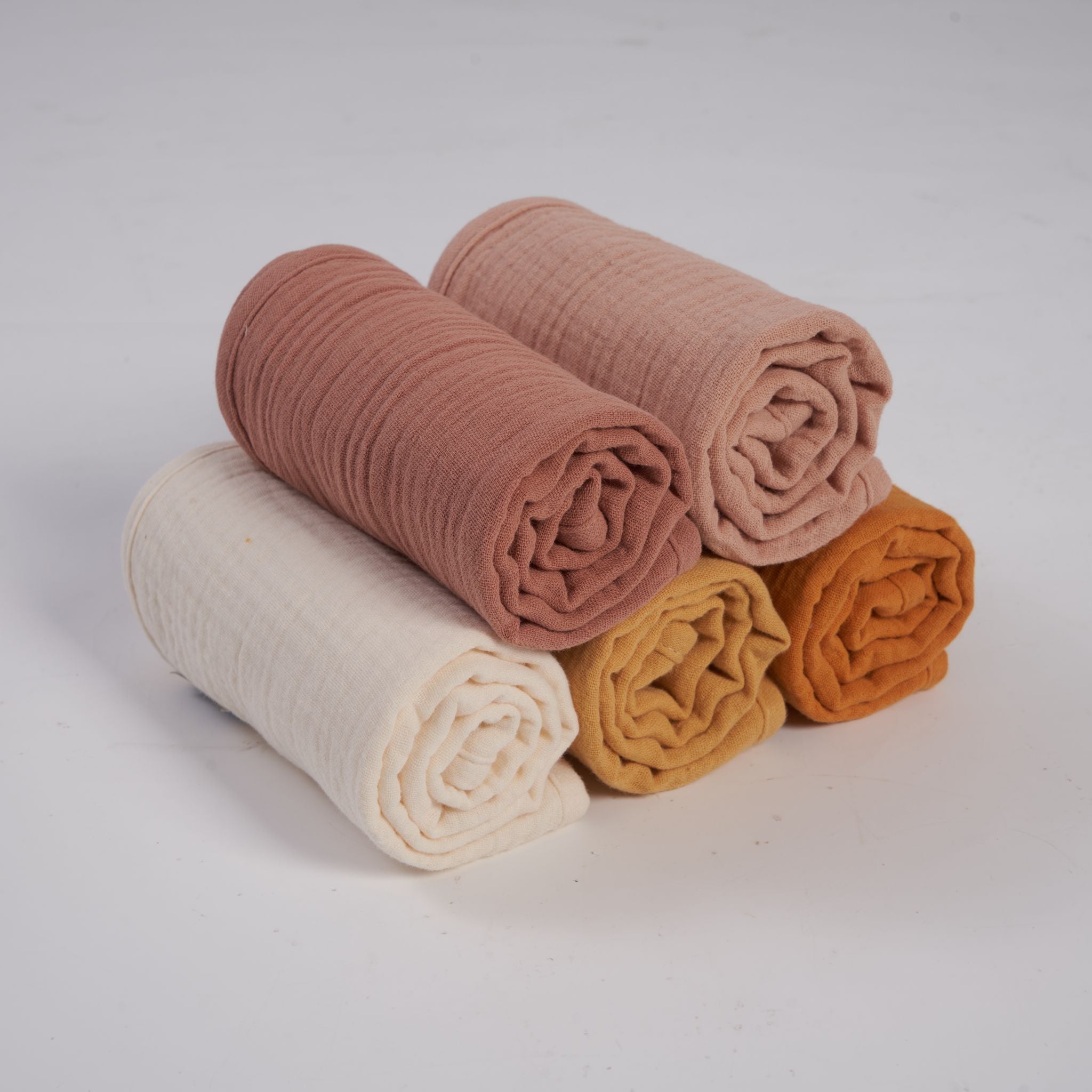

Choosing the right baby blanket affects sleep, comfort, and safety all at once. Australia's climate makes it trickier than most: cold southern winters, humid northern summers, and shoulder seasons that swing between the two. This guide covers the best baby blankets for every Australian season, from fabrics and weights to layering and care.
Baby Blankets for Winter: Warmth Without Overheating
Winter is when blanket choice matters most. Babies lose heat quickly but can also overheat just as fast. The goal is consistent, gentle warmth rather than maximum insulation.
Knitted cotton and waffle-weave blankets are reliable choices. They trap warmth without sealing it in, so temperature stays more stable. Avoid thick synthetic fleece directly against the skin as it can cause sweating and disrupt sleep.
Layering is more effective than one heavy blanket. A fitted swaddle or wrap close to the body, topped with a knitted layer, gives you flexibility to adjust as the room temperature changes overnight.
The Red Nose Australia safe sleep guidelines recommend keeping baby's sleep environment between 16 and 20 degrees Celsius and avoiding loose bedding in the cot for babies under 12 months. A fitted sleeping bag or swaddle is generally safer than a loose blanket for overnight sleep.
Baby Blankets for Summer: Breathable and Lightweight
In summer, the priority shifts to breathability. A blanket that traps moisture will leave your baby uncomfortable and unsettled.
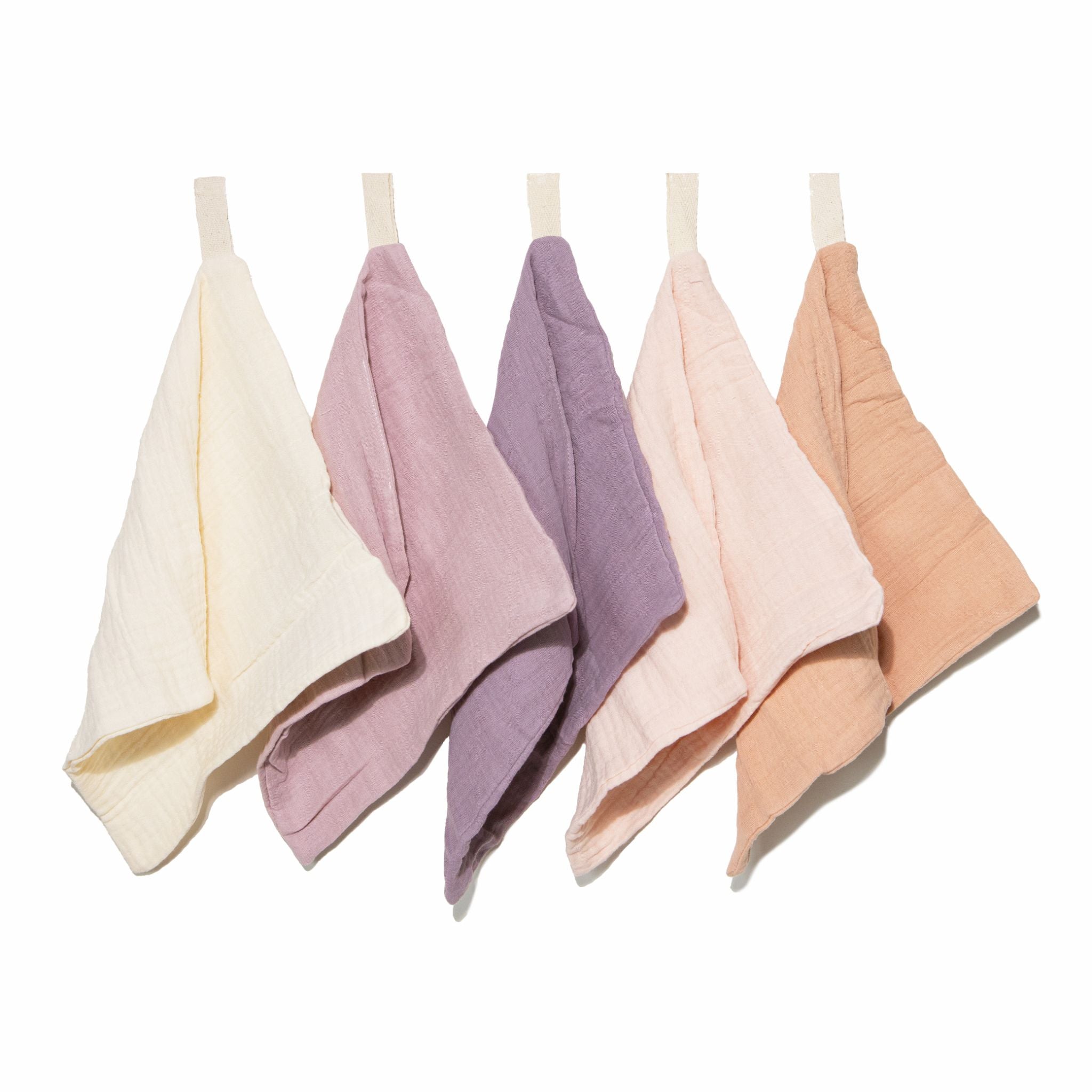
Muslin cotton is a strong choice for warmer months. Its open weave allows air to circulate, and it softens with every wash. Bamboo-cotton blends are also worth considering. Bamboo fabric is silky against sensitive skin, moisture-wicking, and stays cool in warm conditions.
A single lightweight layer is usually enough for summer naps. For air-conditioned rooms, keep a slightly heavier muslin or waffle wrap nearby as a top-up layer, since indoor temperatures can drop quickly.
If you are looking for a set that covers warm-weather naps and doubles as a keepsake, our baby blanket and topknot sets include lightweight options that work well across spring and summer.
Shoulder Seasons: The Case for Versatile Fabrics
Autumn and spring are the hardest seasons to dress babies for. Mornings start cool, afternoons warm up, and nights can drop unexpectedly. A mid-weight blanket in a breathable fabric handles this range better than anything too light or too heavy.
Cotton knit and bamboo-cotton blends sit in the sweet spot. They provide enough warmth for a cool evening but breathe well enough that a warm afternoon nap does not become uncomfortable.
Having two or three blankets in different weights gives you the flexibility to layer up or strip back quickly. A swaddle-weight muslin, a mid-weight knit, and a slightly heavier wrap covers most situations without overcomplicating your nappy bag.
For more guidance on what to look for in fabric quality and construction, the full breakdown of what makes a good baby blanket covers the details worth knowing before you buy.
How to Care for Baby Blankets Year-Round
The best blanket in the world loses its value quickly if it pills, shrinks, or distorts after a few washes. Here is what to look for and how to maintain quality over time.
- Wash before first use to remove any residual finishes from manufacturing.
- Use a gentle, fragrance-free detergent formulated for babies.
- Cold or warm machine wash (30 to 40 degrees) preserves shape and softness better than hot cycles.
- Tumble dry on low or air dry flat to prevent stretching in knitted styles.
- Check care labels. Some bamboo blends specify low-heat drying to maintain their texture.
High-quality blankets should hold their shape and softness for years, not just a season. Fabric pilling after one or two washes is a sign the construction quality is not where it should be.
Choosing a Baby Blanket Set: What to Consider
A blanket set can simplify the buying process, especially for new parents building out their essentials. Look for sets that combine at least two fabric weights so you have options across seasons. Matching topknot sets are a practical addition as they give you a coordinated piece that works for daily use and for photos.
If you are shopping for a gift or building a gift registry, sets tend to offer better value per piece than buying individually. Browse our full range of blanket and topknot sets to find options across different fabrics and weights.
For parents based across the Tasman, the New Zealand baby blanket buying guide covers what to look for in quality sets with local shipping in mind.
Getting the right blanket for each season takes a little planning, but it makes a real difference to how settled and comfortable your baby stays. Start with one or two versatile mid-weight options and build from there as you learn your baby's temperature preferences.