


Reaching for a facial cleanser to wipe your baby's face is a common reflex, especially when you have a bathroom full of skincare. But baby clothes vs facial cleanser is not really a fair fight. A soft, damp washcloth does the job better for most newborns, with no fragrance, no preservatives, and no residue left on delicate skin. This guide explains why fabric matters, what to look for in a baby face cloth, and how to choose between organic muslin and bamboo.
Why Baby Skin Needs a Different Approach
Newborn skin is thinner than adult skin and loses moisture much faster. It reacts easily to synthetic fibres, rough textures, and chemical finishes. Even products labelled gentle or natural can contain preservatives or fragrance that irritate a newborn's face.
A plain washcloth dampened with warm water removes milk residue, dribble, and food without any added ingredients. For the first few months especially, that is usually all you need. When you do introduce a wash, choose one formulated specifically for babies and use it sparingly. The cloth does most of the work.
If you are comparing fabric options in detail, our guide on muslin versus bamboo baby face washers for sensitive newborn skin goes deeper on weave, texture, and absorbency side by side.
Baby Clothes vs Facial Cleanser: What Actually Cleans Better
This question comes up more than you might expect. Parents wonder whether a foaming cleanser or micellar water would do a more thorough job than a cloth. For babies, the answer is almost always the cloth.
Liquid cleansers sit on the surface and need to be rinsed away. On a wriggly baby, rinsing is harder than it sounds. A damp washcloth physically lifts debris from the skin in a single wipe and needs nothing else. No rinse step, no second cloth, no extra product.
The exception is stubborn cradle cap or specific skin conditions. For those, check with your GP or child health nurse before adding any product to the routine.
Organic Muslin vs Bamboo: Which Fabric to Choose
Both are popular for good reason. The right choice depends on your baby's skin and your own preferences for care and feel.
Organic Muslin
Muslin is a loose, open weave cotton that gets softer with every wash. Organic muslin is grown without synthetic pesticides, which matters when the cloth is spending time on a newborn's face. The open weave makes it breathable and quick to dry, which reduces the chance of mildew building up between uses. Muslin also tends to be more affordable and holds up well over hundreds of washes.
It is worth noting that muslin wraps have a dual role for many families. Red Nose Australia recommends lightweight cotton or muslin wraps for swaddling, and advises stopping wrapping at the first signs of rolling or at three months, whichever comes first.
Bamboo
Bamboo fabric is silky in texture, moisture-wicking, and very soft against skin. Many parents find it gentler for babies prone to dryness or sensitivity. It is also breathable and tends to feel cool to the touch. The main trade-off is cost and care. Bamboo washcloths are usually more expensive and prefer a gentle cycle to keep their softness over time.
For a detailed comparison of weave density, absorbency, and long-term softness between the two, the muslin vs bamboo face washer guide covers it thoroughly.
How Many Washcloths Do You Actually Need
More than you think. Face wiping happens after every feed in the early weeks, plus bath time, nappy changes, and meal times once solids begin. A realistic starting point is eight to twelve cloths. That gives you enough to rotate through a few days before washing, without running low.
Once your baby starts solids, you will likely want to add a few more to the rotation. If you are curious about introducing solids, the gentle guide to starting solids is a practical starting point, and for recipe ideas once your baby is ready, the DIY organic baby food recipes article has simple, healthy options.
What to Look for When Buying Baby Washcloths
- Certified organic fabric, with GOTS or OEKO-TEX certification where possible
- No synthetic dyes or chemical finishes on cloths used on the face
- A size that fits comfortably in your hand, usually around 25 to 30 centimetres square
- Generous GSM (grams per square metre) for absorbency without bulk
- Stitched edges that hold up to repeated washing without fraying
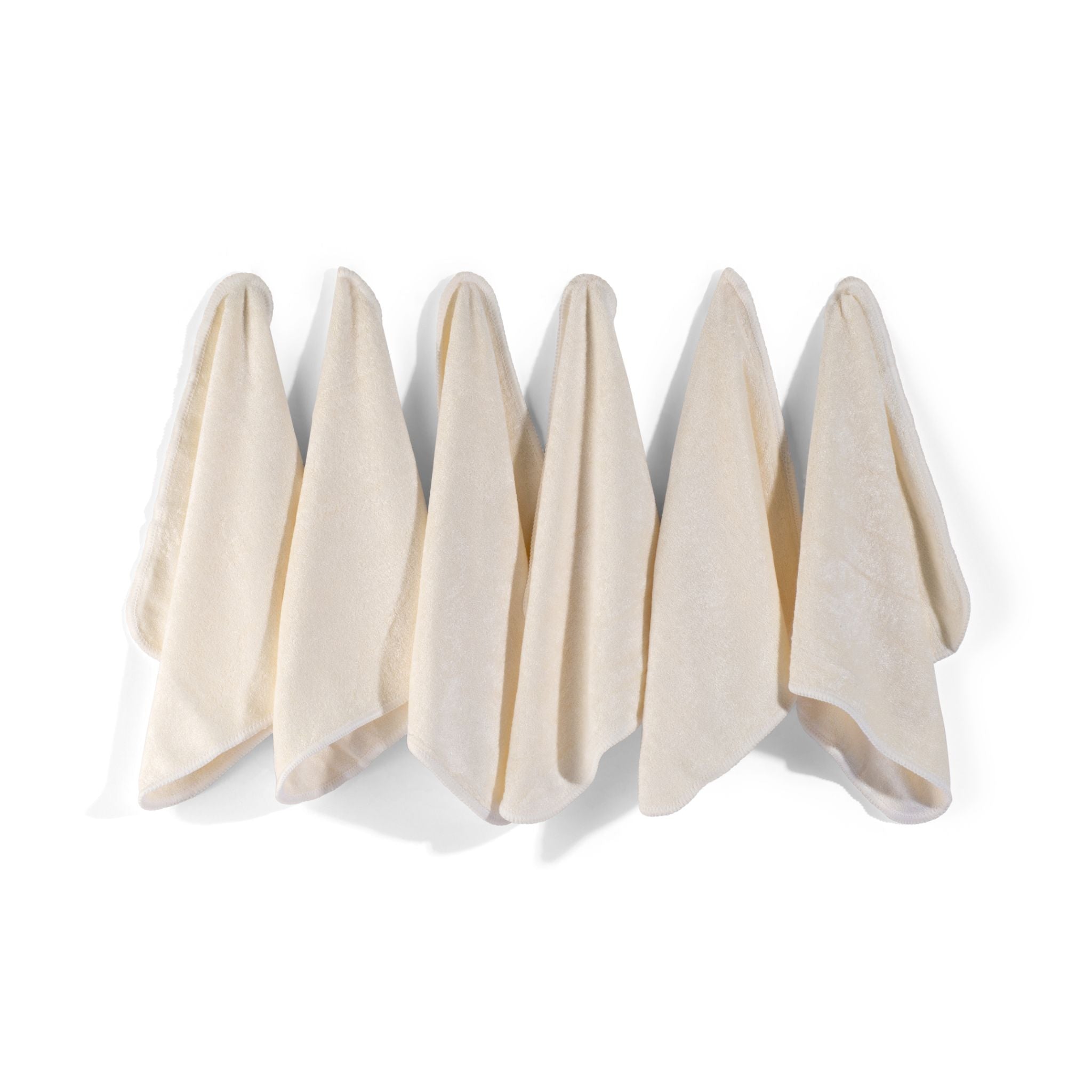
Browse our organic baby washcloths and face towels to see the full range, including muslin and bamboo options in both single packs and gift sets.
Caring for Baby Washcloths
Wash new cloths before first use to remove any residue from manufacturing. Use a fragrance-free, sensitive laundry liquid. Wash at 40 to 60 degrees Celsius to sanitise without damaging the fibres. Tumble dry on low or air dry flat. Avoid fabric softener as it coats the fibres and reduces absorbency over time.
Muslin washcloths generally cope well with warmer washes and quicker drying. Bamboo prefers a cooler, gentler cycle to preserve its soft texture. Check the care label on your specific cloths for the maker's guidance.
Ready to stock up? Shop our full range of baby face washers and cloths for organic options that are gentle enough for daily use from day one.