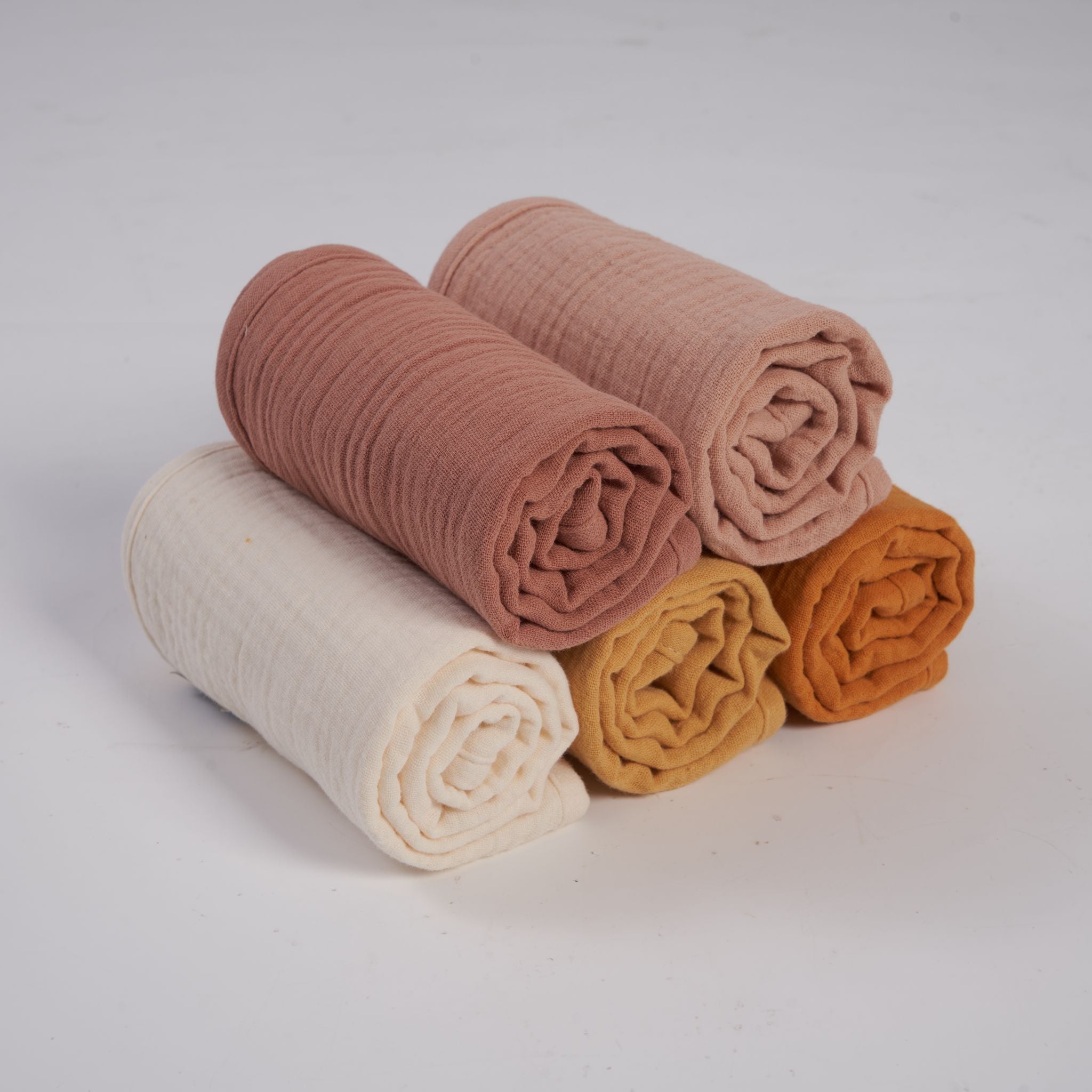

Choosing the right gear for a new baby can feel surprisingly overwhelming, especially when so many products seem to overlap. Two items that come up again and again for parents are baby swaddles and baby carriers. Both promise to soothe, settle, and support your little one, but they do very different jobs. This guide breaks down exactly what each option offers, where each one shines, and how to decide what's right for your family.
Here to shop rather than research? Browse our Baby Carriers and Wraps collection. The guide below covers what to look for, wherever you buy.
What Are Baby Wraps and Swaddles, and How Do They Differ from Carriers?
Before comparing the two, it helps to be clear about what each product actually does.
Baby swaddles and wraps
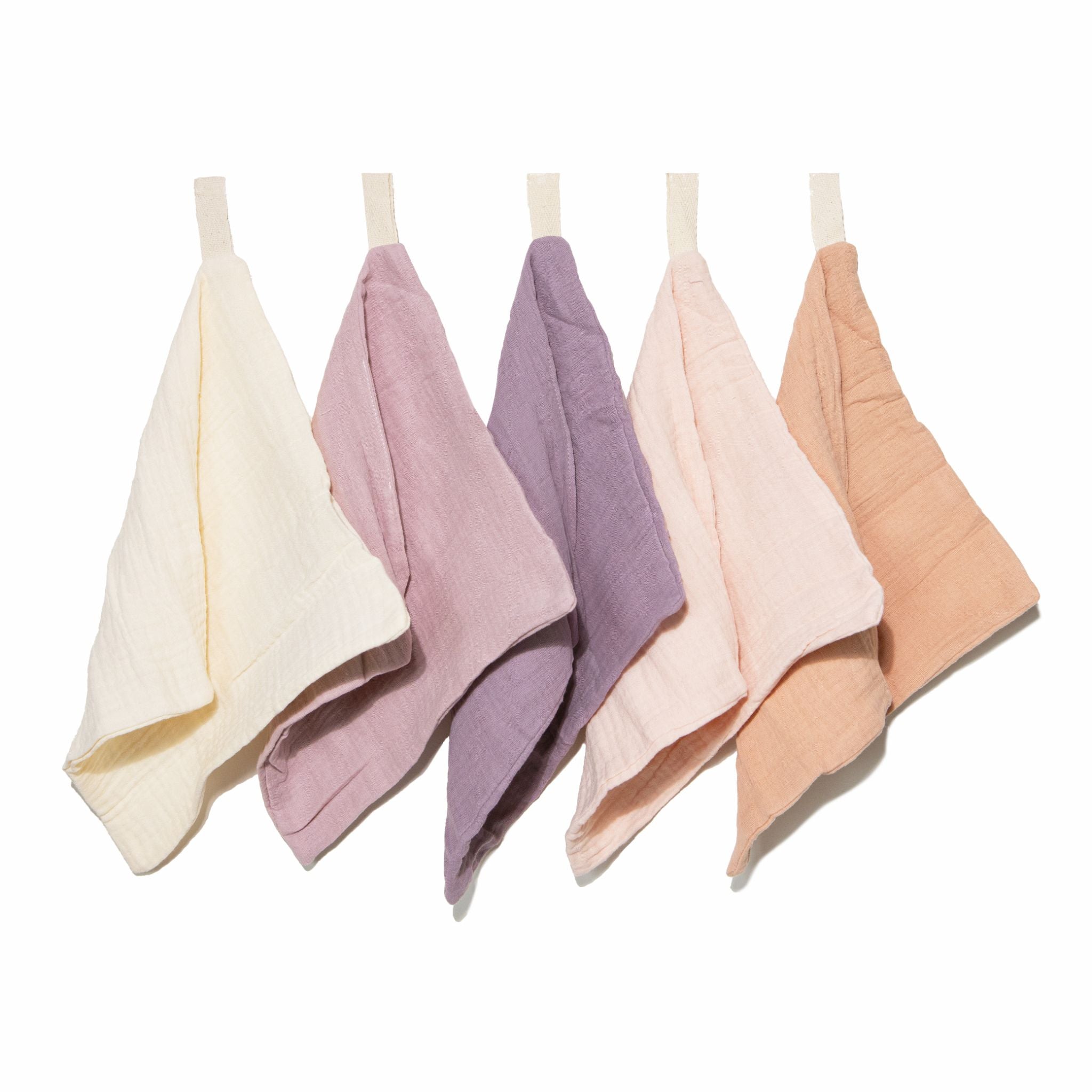
A baby swaddle is a wrap, blanket, or specially designed garment used to snugly wrap a newborn, keeping their arms contained and helping them feel secure. The classic swaddle technique mimics the cosy environment of the womb, which can reduce the startle reflex and encourage longer, calmer sleep. Traditional swaddles are typically made from muslin, cotton, or bamboo fabric, and most parents find them most useful in the newborn stage through to around three or four months, once babies begin rolling.
Muslin wraps, stretchy jersey wraps, and zip-up swaddle suits all fall into this category. They are sometimes called baby wraps, swaddle blankets, or swaddle cloths, and while the names vary, they serve the same core purpose: helping a newborn feel snug and settled.
Safe swaddling matters. Red Nose Australia's swaddling safety guidelines recommend always placing a swaddled baby on their back to sleep, never swaddling above the shoulders, and stopping swaddling as soon as your baby shows signs of rolling.
Baby carriers
A baby carrier is a wearable device that lets you carry your baby on your body, hands-free. Modern structured carriers, like the Ergobaby All Position OMNI 360 Cool Air Mesh Baby Carrier in Onyx Black, support babies from newborn (with an infant insert) all the way through toddlerhood. Soft wraps, like the Hug-a-Bub Pocket Baby Wrap or the Hana Baby Wrap Carrier, are a gentler option for younger babies. Where a swaddle is primarily a sleep and settling aid, a carrier is a tool for closeness and movement throughout your waking day.
Are Cheaper Baby Swaddles Safe? What to Know Before You Buy
This is one of the most common questions new parents search for, and the honest answer is: it depends on the product, not the price tag alone.
A budget muslin wrap from a reputable brand is generally perfectly safe, provided it meets basic standards. Muslin is lightweight and breathable, which matters for temperature regulation during sleep. The fabric itself is not the main safety risk. The main risks with swaddling come down to technique and timing, not cost.
What to check when buying any swaddle, at any price point:
- Is the fabric breathable? Avoid thick, non-breathable materials that could contribute to overheating.
- Does it allow natural hip positioning? A swaddle wrapped too tightly around the legs can contribute to hip dysplasia. The hips should be able to flex and spread.
- Is it free from loose embellishments, ties, or decorations that could pose a choking or entanglement risk?
- Does it meet Australian or New Zealand product safety standards? The Australian Competition and Consumer Commission's product safety guidance on wraps and swaddling products is worth a read before purchasing unfamiliar brands.
A very cheap swaddle from an unknown overseas seller with no safety information is a different proposition to an affordable wrap from a well-known Australian or New Zealand baby brand. Price alone is not the measure. Transparency about materials, clear care instructions, and compliance with safety standards are what to look for.
One area where spending a little more can make a genuine difference is in zip-up or velcro swaddle suits, where a poorly made fastening can come undone during sleep. For basic muslin wraps, quality differences are mostly about softness and durability rather than safety.
Pros and Cons: Baby Swaddles vs. Baby Carriers
The case for baby swaddles
- Excellent for newborn sleep. The snug feeling can extend sleep stretches significantly in those early weeks.
- Simple and affordable. A good set of muslin wraps is one of the lowest-cost investments you can make for a new baby.
- Versatile. Muslin wraps double as pram covers, nursing covers, tummy-time mats, and change table liners.
- Lightweight and easy to pack. A muslin wrap takes up almost no space in a nappy bag.
- Minimal learning curve. Once you know two or three swaddle techniques, wrapping your baby takes about thirty seconds.
Cons to consider:
- Short window of use. Most babies need to stop being swaddled by around three to four months, sometimes sooner if they roll early.
- Not hands-free. A swaddled baby still needs to be held or put down. You cannot carry them and get things done at the same time.
- The transition away from swaddling can be tricky. Some families find the shift to unassisted sleep takes time and patience.
The case for baby carriers
- Hands-free carrying. You can make a coffee, entertain a toddler, or go for a walk while your baby sleeps on your chest.
- Long usability window. A quality structured carrier like the Ergobaby Omni 360 grows with your baby from newborn through to around 20kg. That is years of use, not months.
- Multiple carry positions. Front inward-facing, front outward-facing, hip, and back carries mean you can adapt as your baby grows and as situations change.
- Supports bonding and regulation. Being close to a caregiver's body helps regulate a baby's temperature, heart rate, and stress responses. Raising Children Network's guide to babywearing covers the research on closeness and infant wellbeing.
- Practical for on-the-go families. Carriers are far more manageable than prams in busy cafes, markets, or on uneven terrain.
Cons to consider:
- Higher upfront cost. A premium structured carrier is a bigger investment than a set of wraps.
- Learning curve. Especially with soft wraps, it takes a few tries to get the fit right and feel confident.
- Heat can be a factor. In warmer months, a standard carrier can feel hot for both parent and baby. Mesh options address this directly. The Ergobaby All Position OMNI 360 Cool Air Mesh Baby Carrier uses breathable mesh panels designed specifically to reduce heat build-up, making it far more comfortable in warm conditions.
If you're weighing up mesh carrier options in more detail, our complete guide to choosing a baby carrier for hot weather covers features, comparisons, and what to look for before you buy.
Swaddle Carry: Can You Use a Carrier and a Swaddle Together?
Some parents wonder about combining the two, sometimes called a swaddle carry, where a baby is swaddled before being placed into a carrier or wrap. This is not recommended. A swaddled baby's arms are contained and they cannot brace or push away if their airway becomes compromised. Safe babywearing requires that a baby's airway stays open and visible, and their hands remain free to signal distress.
The two products are designed for different purposes. Use a swaddle for settling and sleep in a safe sleep space. Use a carrier for hands-free closeness while you are awake and moving. They complement each other rather than combine.
When Each Option Works Best
Choose a baby swaddle if...
- Your baby is a newborn and sleep is your biggest challenge in those first weeks.
- You want a low-cost, multi-purpose item that takes up almost no space.
- You're building a gift registry and want practical, everyday staples.
- You prefer something simple that requires almost no set-up or adjustment.
If you're exploring the full picture of newborn sleep products, it's worth reading our article comparing a baby sleeping bag versus a baby carrier, which looks at how each product fits into a broader sleep and settling routine.
Choose a baby carrier if...
- You have a baby who wants to be held constantly but you need your hands free.
- You're returning to daily life quickly and need to be mobile.
- You have other children to manage alongside your newborn.
- You want a product that will still be useful when your baby is a curious, active toddler.
- You're navigating uneven terrain, busy spaces, or outdoor environments where a pram is impractical.
Consider having both if...
- You have a newborn who needs settling support at night and you also want to stay active and hands-free during the day.
- You are expecting twins or have a small age gap between children.
- One parent prefers carrying and the other prefers a pram. A set of muslin wraps and a structured carrier cover both without significant overlap in cost.
The two products rarely compete. For most families, a handful of good muslin wraps and one quality carrier cover the majority of baby's needs in the first year and well beyond.