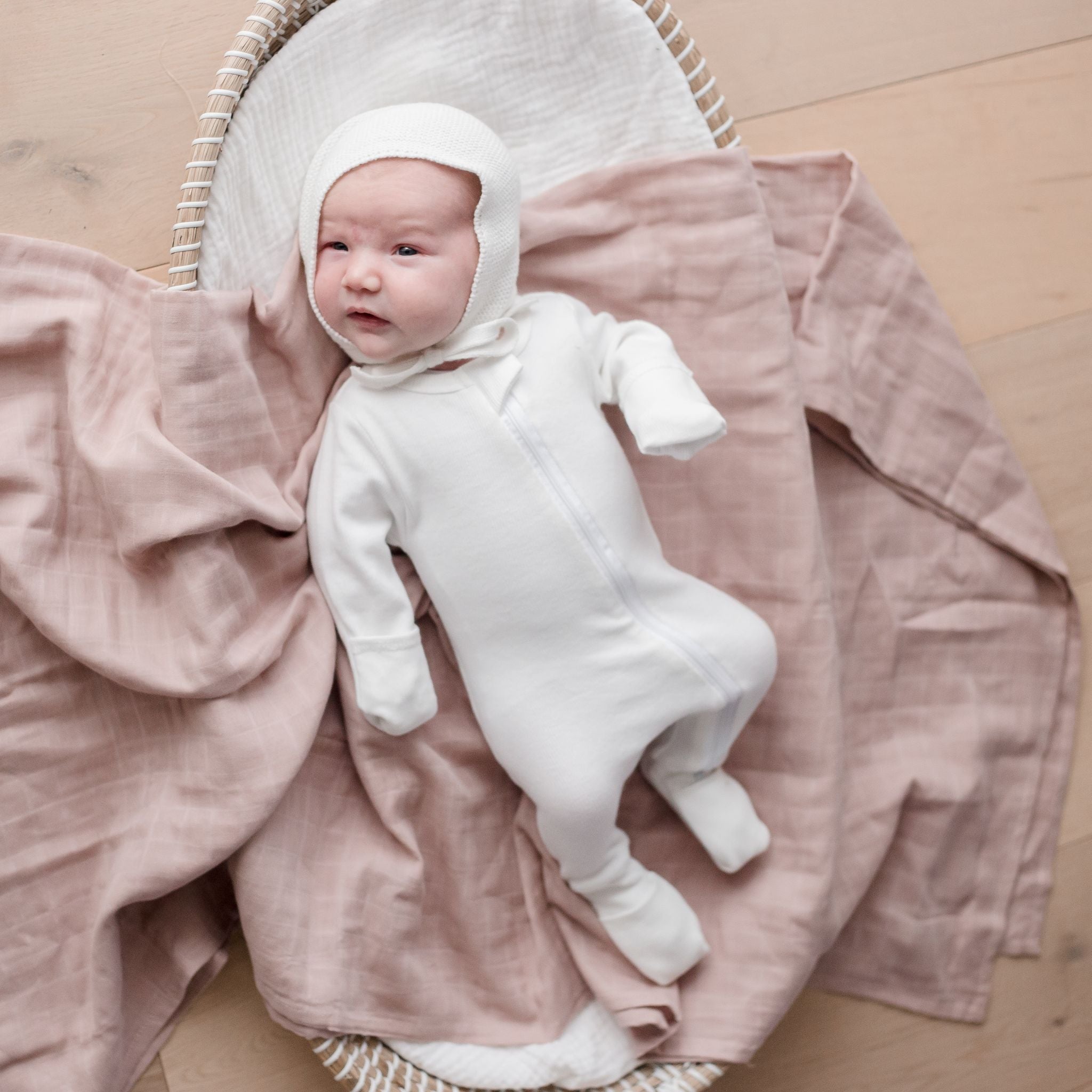

Choosing a swaddle sounds simple until you're standing in front of a dozen options and wondering what the difference actually is. Stretchy or woven? Muslin or knit? One size or adjustable? Neutral tones, particularly warm beiges and oat shades, sit at the heart of the Zoe Sage range. This guide breaks down everything you need to know so you can find the right wrap for your baby, your home, and your daily routine.
Why Beige Swaddles Are a Practical, Not Just Pretty, Choice
There's a reason so many Australian nurseries lean into beige, oat, and stone tones. Neutral wraps photograph beautifully in any light, mix and match easily with your existing linen and clothing, and rarely show their age the way bold prints can. They're also a safe choice for gifting because they suit any nursery palette.
But the real value of a good swaddle sits in what it does for your baby. Swaddling, when done safely, can help newborns feel secure, support longer sleep stretches, and reduce the startle reflex that so often wakes them. The Red Nose Australia safe wrapping guidelines are worth bookmarking if you're new to swaddling. They outline the correct technique, hip-healthy positioning, and when to transition your baby out of wraps as they grow.
If you're building a neutral nursery from the ground up, browse our warm, earthy tones range for wraps, clothing, and accessories that work together beautifully.
The Main Types of Beige Swaddle and What Sets Them Apart
Not all swaddles are made the same, and understanding the key types will help you choose what suits your baby's age, size, and sleep environment.
Stretchy Wraps
Stretchy swaddles are typically made from jersey cotton or a cotton-elastane blend. They have a natural give that makes them forgiving to wrap, which is a genuine relief at 3am when you're half asleep and trying to remember the fold. The Stretchy Baby Swaddle Wrap in Oat is a great starting point for newborns. It moulds gently around your baby's body without being too tight, and the oat colour is warm and neutral without veering into cream or yellow.
Stretchy wraps work best for newborns up to around three to four months. Once babies start showing signs of rolling, it's time to transition out of wraps entirely. Red Nose recommends stopping wrapping at the first signs of rolling, or at 3 months, whichever comes first. Always check the Raising Children Network guidance on wrapping and settling to know when to make that change.
Muslin Squares and Flat Wraps
Muslin is the classic multi-tasker of the baby world. Woven in an open weave, it's breathable, lightweight, and gets softer with every wash, which matters a lot over the first year. The Organic Cotton Muslin Swaddle Wrap in Oat is a favourite for Australian summers precisely because it doesn't trap heat. It's also large enough to use as a pram cover, a makeshift change mat, a nursing cover, or a burp cloth when the swaddling days are behind you.
Flat muslin wraps do require a little more practice to wrap neatly, but most parents find their rhythm within the first week. The payoff is versatility and longevity. Red Nose recommends lightweight cotton or muslin wraps for safe wrapping, so a quality muslin is a well-supported choice.
Knit Blankets and Wraps
Knit wraps and blankets are better suited to cooler months or air-conditioned environments. The Cotton Classic Knit Baby Blanket in Merino is a good example of this category. Merino wool is breathable and temperature-regulating, meaning it adjusts to your baby's body rather than simply adding warmth. It sits close to the skin without irritation for most babies and has a natural softness that holds up well through repeated washing.
Knit blankets aren't always the right choice for swaddling a very young newborn, but they work beautifully as a top layer or a cocoon-style wrap for older babies who no longer need to be firmly swaddled.
Multi-Use Covers and Wraps
Some parents want one product that does multiple jobs. The Multi-Use Nursing and Breastfeeding Cover in Oat bridges the gap between a nursing cover and a lightweight swaddle or pram blanket. It's not a dedicated swaddle, but for parents who feed on the go and want something that doubles up, it's a practical addition to the nappy bag.
The Boba Organic Serenity Wrap Baby Carrier in Stone is another product worth mentioning here. It's primarily a baby carrier wrap, not a swaddle, but it's made from organic cotton and the stone colourway pairs naturally with a neutral nursery aesthetic.
How to Choose the Right Beige Swaddle for Your Situation
There's no single correct answer. The right swaddle depends on your baby's age and build, the Australian climate where you live, and how you'll actually use it day to day. Here are the key factors to weigh up.
Fabric and Breathability
Australia's climate varies enormously. In Queensland or the Northern Territory, breathability is non-negotiable. Muslin and lightweight cotton are your best bet in hot, humid conditions. In Melbourne or Canberra winters, a knit or double-layered wrap adds warmth without overheating. Organic cotton, like the materials used across the Zoe Sage range, tends to be gentler on sensitive newborn skin and free from synthetic finishes that can cause irritation.
Dressing Baby for the Room
Rather than chasing a specific room temperature, dress your baby as you would dress yourself for the same room. Keep their head and face uncovered during sleep. Feel their tummy or back to check comfort: cool hands and feet are completely normal. If your baby feels hot, sweaty, or clammy, remove a layer. A lightweight muslin wrap is easy to add or remove as the night changes, which is one reason it's such a practical choice year-round.
Size and Grow-With-You Factor
Standard muslin squares are typically around 120cm x 120cm. This is big enough to wrap most newborns comfortably and still have enough fabric to use different folding techniques as your baby grows. Stretchy wraps come in longer lengths and have more flexibility in how they're applied. Always check the dimensions before buying, particularly if your baby is on the larger side at birth.
Ease of Use
If you're a first-time parent, stretchy wraps are genuinely easier to start with. The fabric holds its shape during the wrap and the stretch forgives small errors in technique. Once you're more confident, flat muslin wraps give you more control and better airflow. Many parents keep both on hand and reach for different ones depending on the time of day or season.
How Many Swaddles Do You Actually Need?
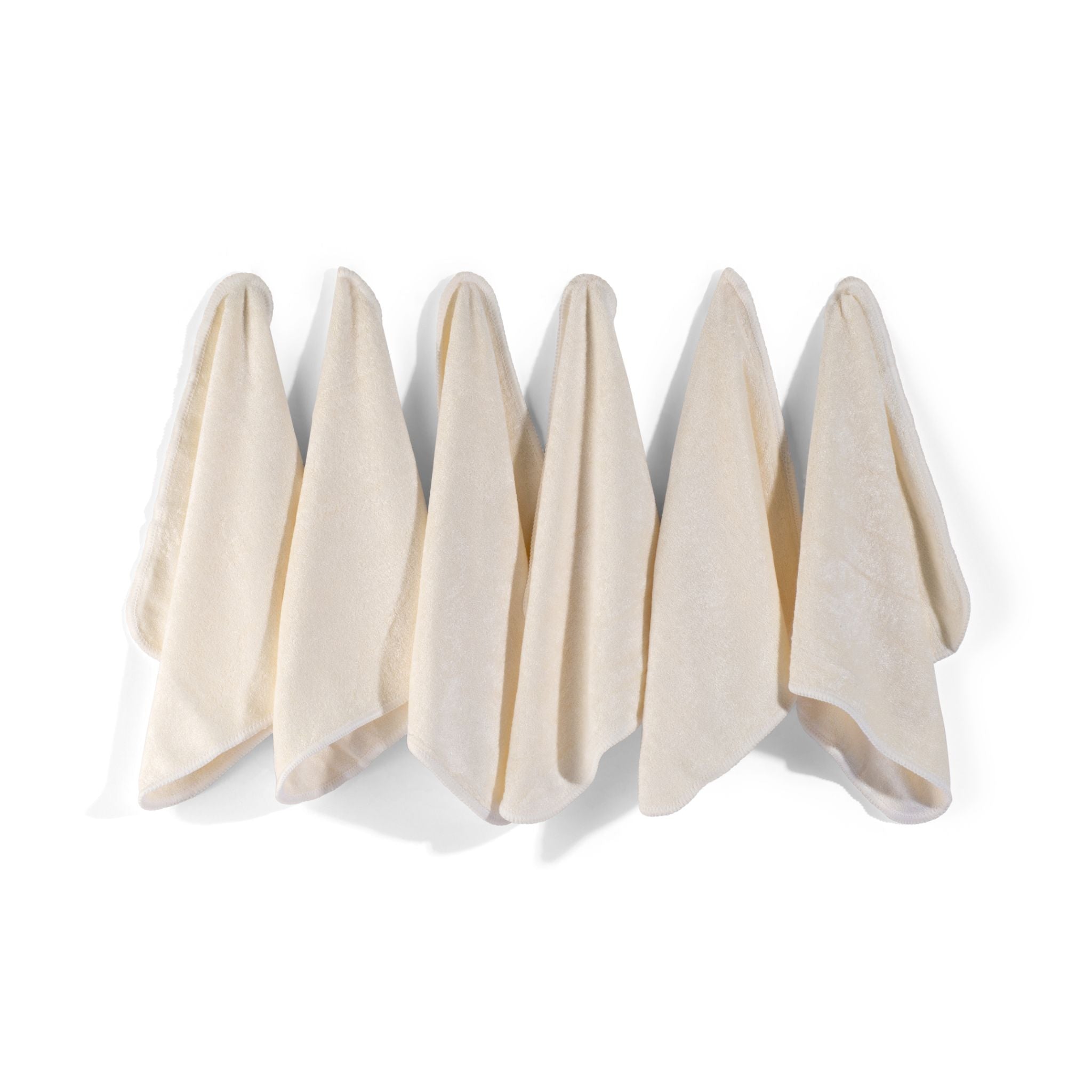
Swaddles go through the wash constantly. Milk, posseting, and nappy leaks mean you'll often go through two or three in a single day, especially in the early weeks. A practical starting point is four to six wraps so you always have a clean one ready while others are drying. If you're buying muslin wraps, having a mix of sizes can help: a larger square for swaddling and a slightly smaller one for tucking around the pram or using as a burp cloth.
Buying in a consistent colourway, like oat or stone, means every wrap in your collection works together. Nothing needs to match perfectly, and you're never stuck with a set that only coordinates with one outfit or one pram liner.
Safe Wrapping: What Every Parent Should Know
Safe wrapping technique matters as much as the wrap itself. A few key points to keep in mind:
- Always place your baby on their back to sleep.
- Keep your baby's head and face uncovered at all times.
- Make sure the wrap is firm but not tight, with room for your baby's hips and legs to move freely. Wrapping too tightly around the legs and hips can affect hip development.
- Red Nose recommends lightweight cotton or muslin wraps and advises stopping wrapping at the first signs of rolling, or at 3 months, whichever comes first.
- Never wrap your baby and then place them in a sleeping bag or add heavy blankets on top.
For full wrapping instructions and hip-healthy technique, visit the Red Nose Australia wrapping guidance. It's one of the most thorough, up-to-date resources available to Australian parents.