Choosing a baby blanket sounds straightforward until you're standing in front of a dozen options, all claiming to be the softest, safest, and most sustainable thing on the shelf. If you've found yourself wondering what actually separates a quality organic cotton baby blanket from the rest, you're in the right place. At Zoe Sage, we've built our range around the belief that what touches your baby's skin should be pure, thoughtful, and made to last well beyond the newborn stage. This guide will walk you through everything you need to know to make a confident, informed choice.
Why Fabric Choice Matters More Than You Might Think
Babies have notoriously sensitive skin. Their skin barrier is thinner than an adult's, which means irritants, synthetic dyes, and harsh chemical finishes can cause redness, rashes, and general discomfort far more readily. Organic cotton addresses many of these concerns at the source. Unlike conventional cotton, which is one of the most pesticide-intensive crops in the world, organic cotton is grown without synthetic pesticides or fertilisers, and processed without harsh chemical bleaches or finishes.
The result is a fabric that is softer, gentler, and kinder to sensitive newborn skin. It's also better for the people farming it and for the soil it grows in, which matters if sustainability is on your radar as a parent.
If you want to understand how natural fibres perform specifically across the cooler months, it's worth reading about why organic baby blankets made with natural fibres are a smart choice for winter. It goes into detail on breathability and temperature regulation that directly informs how you choose a blanket year-round.
What to Look for on a Label
When shopping for the best organic cotton baby blanket in Australia, the label is your first checkpoint. Look for certifications such as GOTS (Global Organic Textile Standard) or OEKO-TEX Standard 100. GOTS covers the entire supply chain from farm to finished product, while OEKO-TEX certifies that the fabric has been tested and found free from harmful substances. Either certification gives you confidence that the "organic" claim isn't just marketing language.
Also check the country of origin and whether the brand is transparent about its manufacturing process. Brands that share this information openly tend to take quality and ethics seriously across the board.
Understanding Weave Types, Weight, and Breathability
Not all cotton blankets are woven the same way, and the weave has a direct impact on how the blanket feels, how it breathes, and how it performs across different seasons.
Muslin Weave
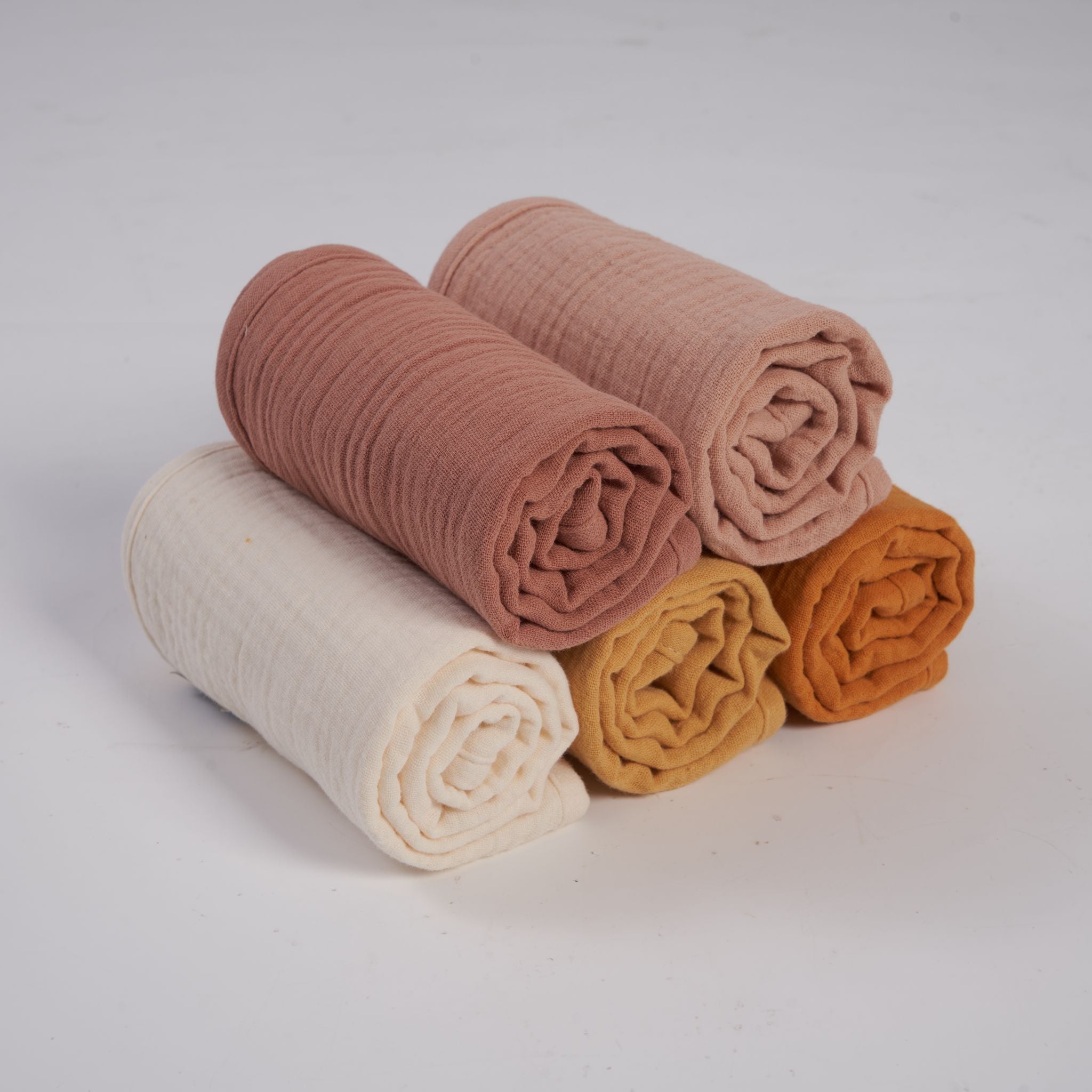
Muslin is an open, loose weave that gives the fabric its signature lightweight, gauzy feel. It's incredibly breathable, which makes it excellent for warm Australian summers and for wrapping newborns who are still regulating their body temperature. Muslin softens with every wash, so a blanket that feels already gentle when new becomes even softer over time.
Knit Weave
A knit construction, as used in our Cotton Classic Knit Baby Blanket range, creates a fabric with natural stretch and a cosy, textured feel. Knit blankets are warmer than muslin while still being breathable, making them a brilliant choice for cooler evenings, pram trips in autumn, or layering during winter. The stretch in a knit also means the blanket drapes beautifully and moulds gently around your baby rather than sitting stiffly.
Waffle and Terry Weaves
Waffle weaves offer a structured grid pattern that adds surface texture and excellent air circulation. Terry weaves, more common in towelling products, are plush and absorbent. These are less common in blankets but occasionally appear in multi-use wraps.
Weight and TOG Ratings
For swaddle-style blankets, weight isn't typically measured by TOG (that rating is more relevant for sleeping bags). Instead, focus on the gsm (grams per square metre) of the fabric. A lighter muslin might sit around 100gsm, while a knit blanket will typically be 200gsm or above, offering more warmth. Match the weight to the season and your baby's sleep environment. The Red Nose Australia safe sleeping guidelines are an essential reference point here, particularly around how to layer bedding safely to avoid overheating.
Choosing the Right Size for Your Baby's Stage
Blanket sizing is one of those things that catches parents off guard. A blanket that works perfectly as a newborn swaddle may be too small for a toddler nap blanket in two years' time. Here's a rough guide:
- Small (around 75x75cm to 80x80cm): Suited to swaddling newborns, using as a pram liner, or as a play mat topper for tummy time.
- Medium (around 100x100cm to 120x120cm): A versatile all-rounder that works from the newborn phase through to toddlerhood. Great for pram covers, nursing covers, and cot layering.
- Large (120x120cm and above): Excellent for cot use, toddler beds, and longer-term use as a comforter or snuggle blanket.
If you're buying a gift or purchasing ahead of a due date, a medium-to-large size tends to offer the most longevity and gets the most use across the baby and toddler years.
Caring for Your Organic Cotton Blanket
One of the great advantages of organic cotton is that it's durable and easy to care for, provided you follow a few basic guidelines. Most organic cotton blankets can be machine washed on a gentle or delicate cycle using cold or warm water (avoid hot, which can cause shrinkage and fibre breakdown). Use a mild, fragrance-free detergent, particularly for the first few months while your baby's skin is most sensitive.
Tumble dry on low heat or line dry in the shade. Direct sunlight over long periods can fade colour and weaken fibres. Avoid fabric softeners, which coat fibres and reduce breathability over time. With proper care, a quality organic cotton baby blanket will wash beautifully wash after wash and often looks better with age as the fibres settle and soften.
Introducing the Zoe Sage Cotton Classic Knit Collection
Our Cotton Classic Knit Baby Blanket range has been designed to tick every box a modern Australian parent needs: organic cotton, a cosy knit construction, generous sizing, and colour palettes that feel at home in contemporary nurseries.
The collection is available in five carefully considered colour options, each chosen to complement a range of nursery aesthetics without being overly trend-led:
- Cotton Classic Knit Baby Blanket , Baby Blue: A soft, muted blue that works beautifully in neutral nurseries and adds a gentle contrast to natural timber tones.
- Cotton Classic Knit Baby Blanket , Blossom: A delicate blush that feels warm and organic, pairing effortlessly with white, cream, and sage nursery palettes.
- Cotton Classic Knit Baby Blanket , Carousel Pink: A slightly deeper, more playful pink with a timeless feel. Perfect for those who love a little more colour.
- Cotton Classic Knit Baby Blanket , Dove Grey: A cool, versatile grey that suits virtually any nursery colour scheme and photographs beautifully.
- Cotton Classic Knit Baby Blanket , Flamingo Pink: A warm, vibrant pink that adds personality and pairs well with earthy terracotta and nature-inspired nursery themes.
Each blanket in the range is crafted from organic cotton with a knit construction that offers gentle stretch, excellent breathability, and that tactile, textured quality that makes it feel genuinely premium. If you'd like to explore the full range, browse our collection of organic cotton baby blankets for Australian families to see all available styles and colours.
These blankets also make a considered, practical gift. Pair one with our Linen Bandana Dribble Bib or wrap it up alongside one of our hooded bath towels like the Bear Hooded Baby Bath Towel & Mitt , Baloo for a gift set that genuinely gets used.
Comparing Your Options: A Simple Buying Framework
To bring it all together, here's a practical framework to use when comparing organic cotton baby blankets in Australia:
- Check the certification. GOTS or OEKO-TEX is your baseline for genuine organic credentials.
- Match the weave to the season. Muslin for warm months, knit for cooler temperatures and year-round versatility.
- Consider the size. Aim for medium-to-large for the best longevity across your baby's stages.
- Review the care instructions. A blanket that can handle regular machine washing without losing shape or softness is a practical, real-world choice.
- Think about colour and longevity. Choose a shade you'll still love in two years, not just one that matches the cot you've ordered today.
- Factor in the brand's transparency. Can you find out where the blanket was made? What it's certified to? Good brands make this easy to find.
Frequently Asked Questions
Is organic cotton actually better for a baby's skin than regular cotton?
Organic cotton is grown without synthetic pesticides and processed without harsh chemical finishes, which means the finished fabric is less likely to contain residual irritants. For babies with sensitive or eczema-prone skin, this can make a meaningful difference. It's worth reviewing guidance from Raising Children Network on baby skin care if your baby has specific skin concerns.
Can I use a knit cotton blanket as a swaddle?
A knit blanket can be used for swaddling in the early newborn stage, though the stretch in a knit construction means it won't hold as firmly as a purpose-made muslin swaddle wrap. For dedicated swaddling, a flat muslin wrap gives you more control. A knit blanket is better suited to pram layers, cot layering, and snuggle use. Always follow safe sleep guidelines: the Red Nose Australia safe sleeping recommendations outline how to safely use blankets in a baby's sleep space.
How many baby blankets do I actually need?
Most parents find that three to four blankets covers day-to-day life comfortably. Having a few in rotation means you always have a clean one on hand when one is in the wash. If you use blankets for multiple purposes (swaddling, pram cover, play mat, nap time), you may find yourself reaching for four or more regularly.
What's the difference between a baby blanket and a muslin wrap?
The terms are sometimes used interchangeably but there are practical differences. A muslin wrap is typically flat-woven, very lightweight, and designed with swaddling in mind. A baby blanket often has more structure, a knit or waffle weave, and is intended more for warmth and comfort layering than swaddling technique. Many families use both for different purposes, especially across the newborn to toddler years.