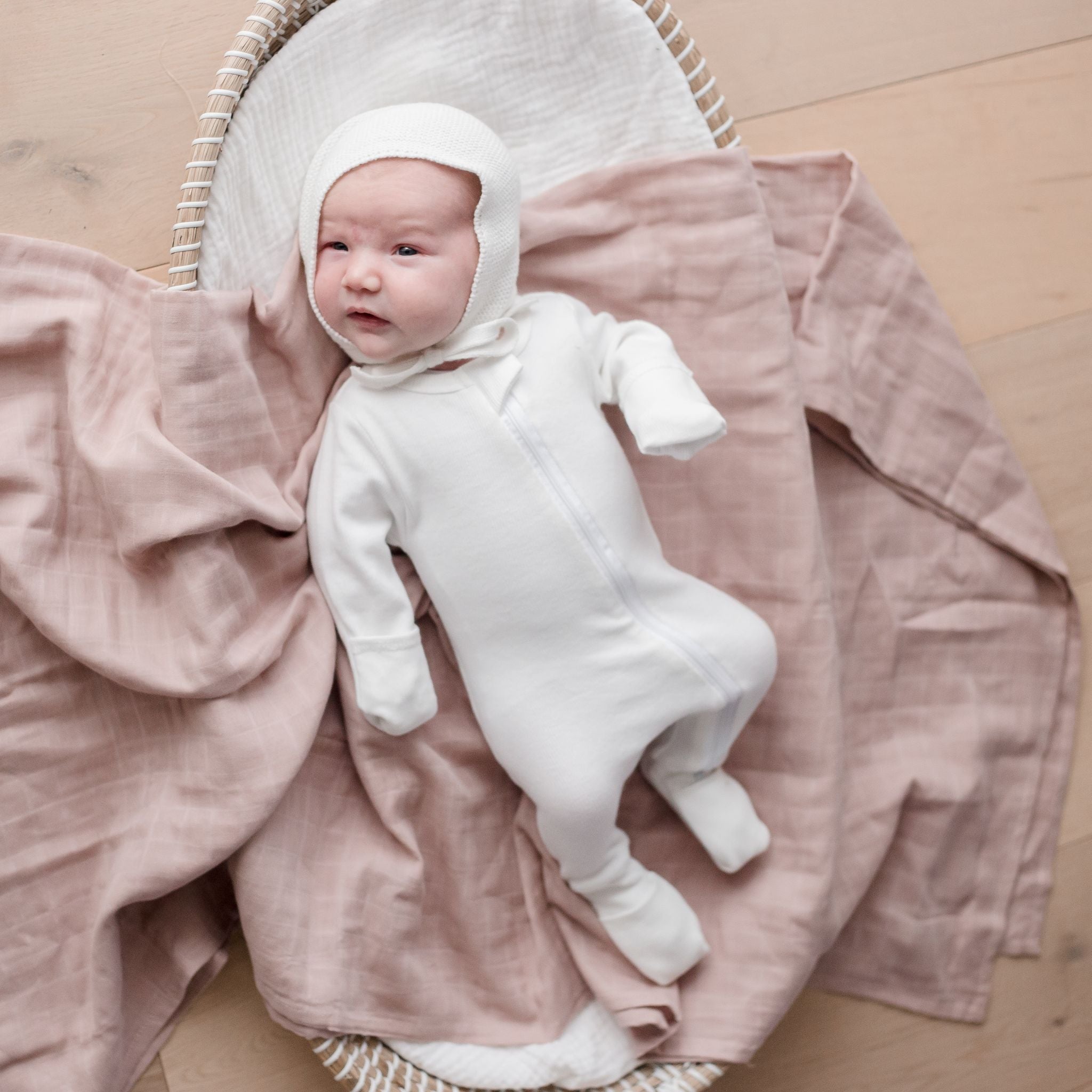

Finding the best burp cloths in Australia comes down to one thing: fabric that actually absorbs before the spill hits your shoulder. Thin flannelette squares and synthetic sets look fine in a gift basket. They fall apart in the wash and leave you soggy by week two. Organic muslin is different. It softens with every wash, breathes against newborn skin, and holds up through reflux, cluster feeding, and everything in between.
This guide covers what to look for, how many to buy, and why the fabric decision matters more than most parents expect. Orders ship from our Australian warehouse to parents across Australia and New Zealand, with free shipping on orders over $150 NZD.
Why Fabric Choice Matters More Than You Think
Burp cloths sit against your baby's face and neck dozens of times a day. That means fabric matters, not just for absorption, but for comfort on sensitive skin. Organic cotton muslin wins here for a few reasons.
- It is free from synthetic pesticide residues, which matters for babies with reactive skin.
- The open weave breathes well, so it stays cooler against skin than terry or flannelette.
- It softens significantly after washing, often becoming noticeably softer by the third or fourth wash.
- It absorbs quickly without feeling stiff or scratchy.
Bamboo muslin is another option worth knowing about. It is silky, moisture-wicking, and very soft straight out of the packet. It tends to cost a little more than organic cotton but performs well in warmer months. If you are weighing up fabrics for the Australian climate, our guide on whether organic cotton holds up in warmer weather is worth a read before you decide.
How Many Burp Cloths Do You Actually Need
The honest answer is more than you think. Most parents underestimate how often they reach for one in the first eight weeks.
- Newborns with reflux can soak through three or four cloths in a single feed.
- Even settled babies produce enough possets to go through six to eight cloths a day.
- Wash cycles, drying time, and the reality of not always getting to laundry on the day mean you need a buffer.
A practical starting point is twelve cloths minimum. That gives you enough to rotate through two or three days without stressing about washing. Many parents find they use even more in the early weeks and scale back after the newborn stage settles.
For a fuller breakdown of quantities by feeding style and reflux level, our complete guide to choosing burp cloths for Australian babies goes into more detail.
What to Look for When Buying Muslin Burp Cloths
Size and shape
Bigger is better. A generous size, at least 65 cm across, gives you coverage over your shoulder and room to fold for a fresh surface mid-feed. Small squares might look sweet folded in a drawer but they are frustrating to use at 3 am.
Layer count
Double-layer muslin absorbs more than a single layer without becoming heavy or slow to dry. Some cloths add a terry backing for extra absorbency. That works well for heavy possiters, though it adds drying time.
Certifications
Look for GOTS (Global Organic Textile Standard) or OEKO-TEX certification on anything labelled organic. These certifications confirm the fabric has been tested for harmful substances and meets a verifiable standard. A product using the word organic without either certification is worth questioning.
Washability
Burp cloths live in the wash. Check that the cloth can handle warm machine washing without pilling, shrinking, or losing shape. Organic cotton and bamboo muslin both hold up well with repeated washing, provided you skip the fabric softener, which can reduce absorbency over time.
Organic vs Conventional: Is It Worth the Price Difference
Conventional cotton uses significant pesticide inputs during growing. For everyday items like t-shirts, the residue argument is fairly small. For burp cloths that rest against a newborn's face and mouth for hours each day, organic makes more sense to many parents.
The price difference between organic and conventional muslin has narrowed considerably. At the quality end of the market, you are paying more for the certification, the fabric weight, and the construction than for a large premium over standard cotton.
Our guide to quality organic burp cloths for Australian and New Zealand parents compares what different price points actually get you in terms of fabric and durability.
Breastfeeding, Bottle Feeding, and Reflux Considerations
Breastfed babies tend to posset less than bottle-fed babies, though there is plenty of variation. If your baby has diagnosed reflux or is a frequent spitter, go straight to the higher end of the quantity range and prioritise double-layer cloths over single.
The Australian Breastfeeding Association has practical support on feeding positions that can reduce the amount of air your baby swallows, which in turn can reduce positing. Worth bookmarking alongside your cloth stash.
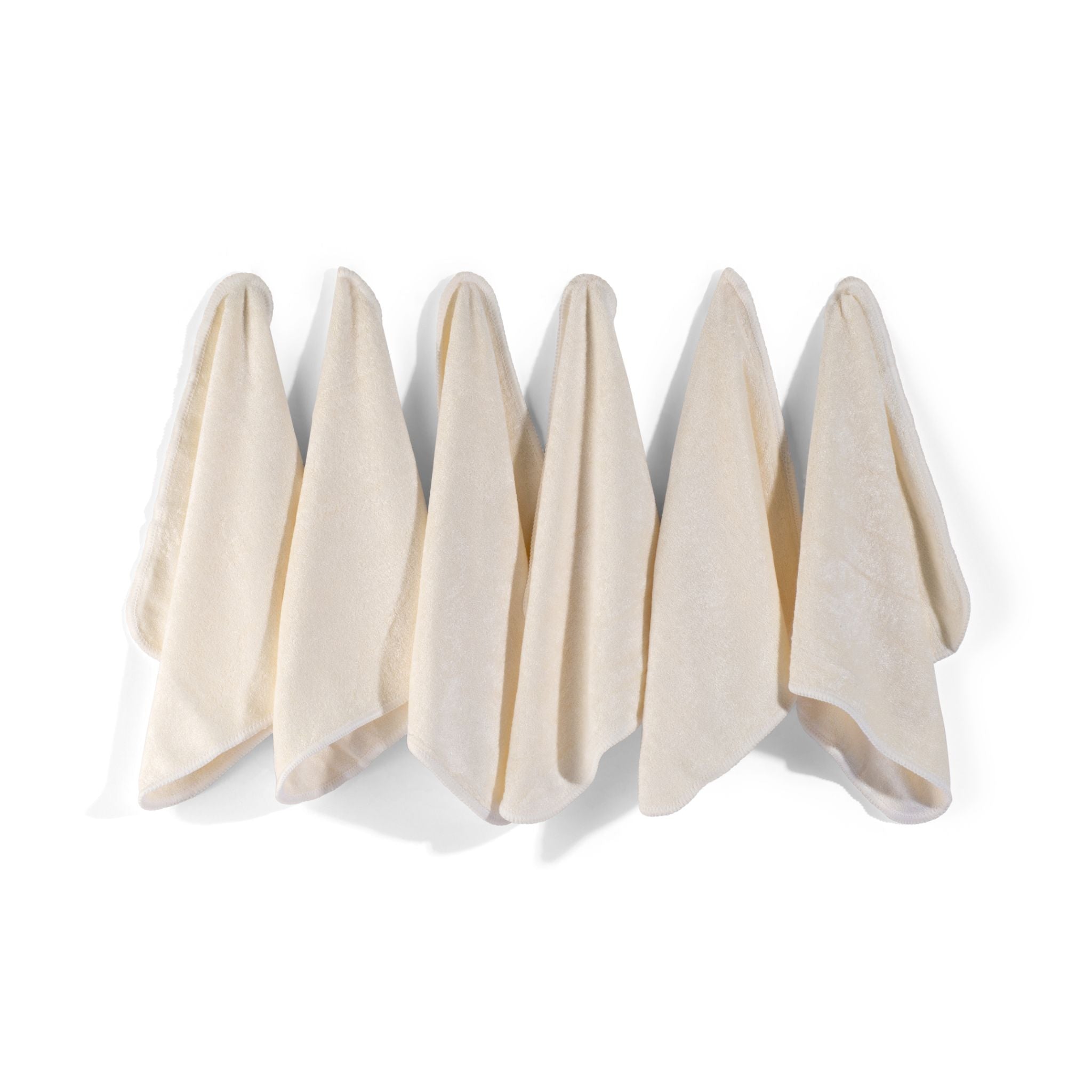
Ready to stock up? Browse our organic muslin burp cloths, made from certified organic cotton and sized generously for real-world use.