

Finding the right cotton baby blanket takes more thought than most people expect. Fabric, weave, certifications, sizing. It adds up fast, especially at midnight with a sleeping baby in your arms. This guide cuts it down to what actually matters, so you can choose with confidence.
Why Organic Cotton Works So Well for Newborns
Cotton is breathable, washable, and gentle against brand-new skin. For newborns especially, that breathability matters. Babies regulate their body temperature differently to adults, and a fabric that traps heat can cause overheating quickly.
Organic cotton goes one step further. It is grown without synthetic pesticides or harsh chemical finishes, which means less residue against delicate skin. For babies with sensitive or reactive skin, that difference can be significant. Conventional cotton is one of the most heavily sprayed crops in the world, so the organic certification is not just a marketing label. It reflects a genuinely cleaner process from field to finished product.
If you are comparing fabric options, our guide to natural fibres in baby blankets explains how different materials perform across seasons, which is worth reading before you buy.
What to Look for When Choosing an Organic Cotton Baby Blanket
Certifications that actually mean something
Look for GOTS (Global Organic Textile Standard) or OEKO-TEX STANDARD 100 certification. GOTS covers the entire supply chain, from the cotton farm through to the dye and finishing stage. OEKO-TEX tests the finished product for harmful substances. Either gives you a reliable baseline. If a blanket claims to be organic but carries no third-party certification, that claim is hard to verify.
Weave and weight
The weave affects everything: warmth, stretch, softness, and how well the blanket holds its shape after washing.
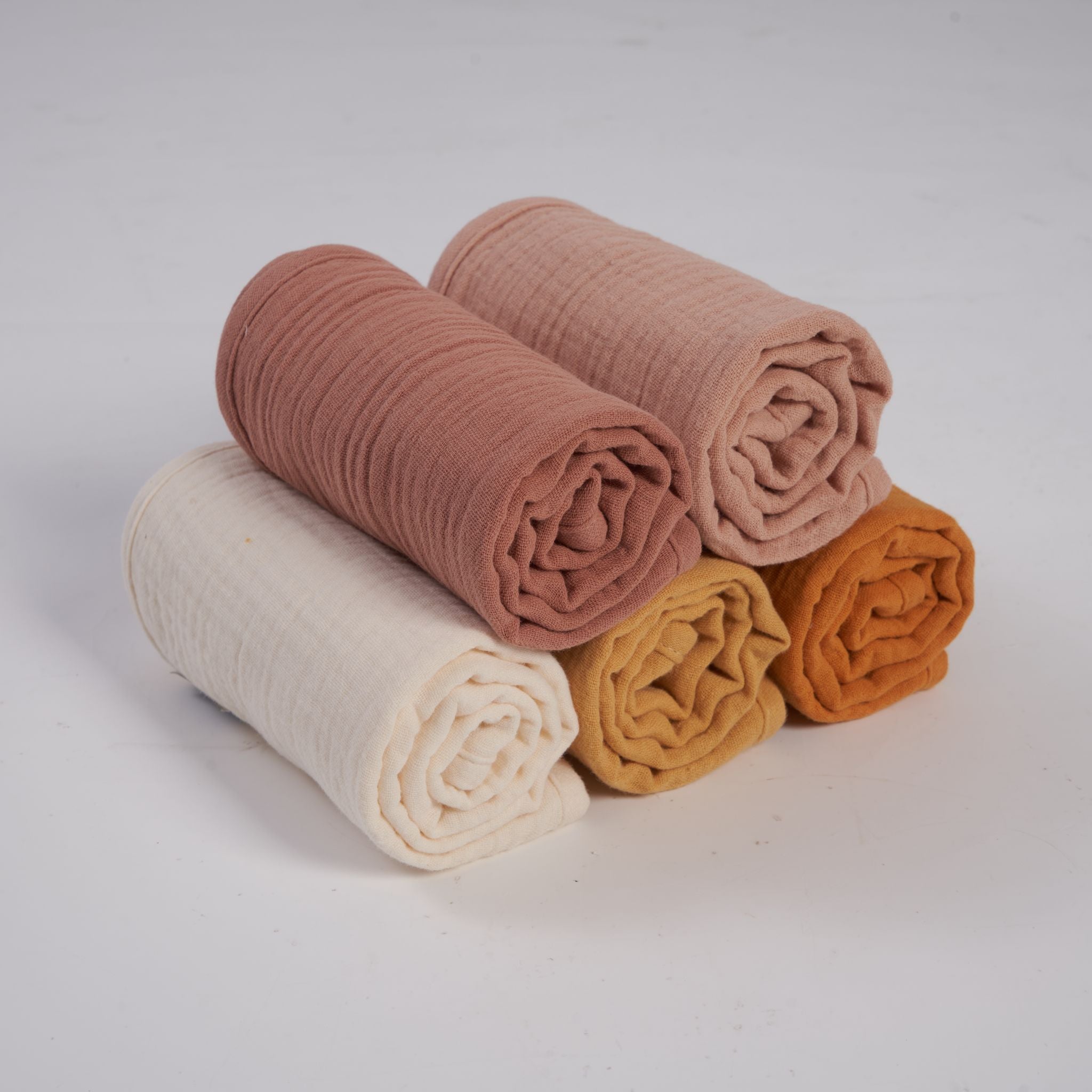
- Muslin (open weave): Lightweight and very breathable. Gets softer with every wash. Good for layering, wrapping, or general use across warm and mild weather.
- Waffle knit: The textured surface creates small air pockets that add warmth without bulk. Works well as a pram blanket or an extra layer in cooler months.
- Cable or cotton knit: Thicker and cosier. Better suited to winter use or for draping over a pram in cool weather.
- Jersey: Soft with a gentle stretch. Easy to tuck and fold, and forgiving to wash repeatedly.
You can browse our organic cotton baby blanket range to compare weaves and weights side by side.
Size matters more than you think
A blanket that is too small becomes useless within weeks. For newborns, 75 x 100 cm is a practical starting size. A 100 x 100 cm or larger blanket gives you much more flexibility as baby grows, and works across more uses: floor play, pram coverage, nursing coverage, and as a general wrap.
Safe Sleep: What You Need to Know About Blankets in the Cot
This is the part most product guides skip. According to Red Nose Australia, the safest sleep environment keeps baby's head and face uncovered at all times. Loose blankets in the cot are a known risk factor for sudden unexpected death in infancy.
If you do use a blanket in the cot, tuck it firmly under the mattress and make sure it reaches no higher than baby's chest. A better option for most families is a fitted, layered approach without loose bedding in the sleep space at all.
To check if baby is the right temperature, feel their tummy or back. Cool hands and feet are normal. If baby feels hot, sweaty, or clammy, remove a layer. Dress baby as you would dress yourself for the room. There is no need for a room thermometer. Red Nose does not recommend leaving heating or cooling on all night, and does not endorse a specific room temperature target.
No soft toys or comforters should be in the sleep space until at least seven months. Red Nose prefers nothing extra in the sleep space for the first twelve months.
Cotton and muslin blankets are ideal for wrapping a newborn before sleep. Red Nose recommends lightweight cotton or muslin wraps and advises stopping wrapping at the first signs of rolling, or at three months, whichever comes first.
How to Care for Organic Cotton Blankets So They Last
Organic cotton is durable, but a few habits keep it in better shape for longer.
- Wash in cold or warm water, not hot. Hot water can cause shrinkage and weaken fibres over time.
- Use a fragrance-free, gentle detergent. Synthetic fragrance can irritate sensitive skin.
- Line dry where possible. A tumble dryer on a low setting is fine occasionally, but repeated high heat shortens the life of the fabric.
- Avoid fabric softener on knit weaves. It can flatten the texture and reduce breathability.
If you want a deeper look at what to check before you buy, our organic cotton baby blanket buying guide covers certifications, sizing, and what questions to ask when comparing products.
Ready to Shop
A good organic cotton blanket is one of the most-used items in a baby's first year. Get the fabric and size right and it will see you through newborn days, the pram stage, and well beyond. Shop our cotton baby blankets and filter by weave, weight, or size to find the right fit for your baby.