

Choosing the right sleepwear is one of the most practical decisions you'll make for your baby. The wrong fabric, the wrong TOG, the wrong fit , any of these can affect sleep quality and comfort. This guide covers organic baby sleepwear from the ground up: what to look for, how to choose the right warmth rating for your Australian climate, and how to shop with safety at the front of mind.
Why Organic Baby Sleepwear Matters for Australian Families
Australia's climate is wonderfully varied. Tropical Far North Queensland summers sit alongside crisp Tasmanian winters, and that range makes choosing baby sleepwear more nuanced than it might first appear. On top of climate, there's a growing awareness among Australian parents about what goes next to their baby's skin for ten or more hours each night.
Organic fabrics, particularly GOTS-certified organic cotton and sustainably sourced bamboo, are grown and processed without synthetic pesticides or harmful chemical finishes. For a baby whose skin is significantly thinner and more permeable than adult skin, that matters. Bamboo fabric is especially popular in Australia because it is breathable, moisture-wicking, and silky soft against delicate skin, making it well suited to warm, humid conditions. Organic cotton remains a trusted classic for its durability and gentle feel across all seasons.
When comparing fabrics, here is what to look for:
- GOTS certification on organic cotton confirms the entire supply chain meets strict environmental and social standards, not just the raw fibre.
- OEKO-TEX Standard 100 certification means the finished fabric has been tested for harmful substances, including dyes and finishing agents.
- Bamboo fabric labelled as bamboo viscose or bamboo lyocell has been mechanically or chemically processed from the plant. Lyocell uses a closed-loop process that is gentler on the environment. Both produce that characteristic soft, breathable finish.
- Avoid sleepwear with thick embellishments, ribbons, or decorative buttons near the face and neck. These are a snag and choking hazard.
Beyond fabric, safe sleep is the non-negotiable foundation. Red Nose Australia's safe sleep guidelines recommend that babies sleep on their back, in their own safe sleep space, free from loose bedding, pillows, and bumpers. A well-fitted sleeping bag replaces loose blankets entirely, which is one of the key reasons sleep sacks have become the standard choice for Australian parents.
Understanding TOG Ratings: Matching Warmth to Your Climate
TOG stands for Thermal Overall Grade. It is the standard measure of how much warmth a sleeping bag or blanket provides. The higher the TOG, the warmer the product. Getting this right is one of the most practical things you can do for your baby's comfort and safety overnight.
Match your TOG to the actual overnight room temperature, not the season alone. A room with heating or air conditioning may sit at a very different temperature to what the weather outside suggests.
- 0.5 TOG: Warm rooms above 24°C. Baby wears a nappy or short-sleeve bodysuit underneath. Ideal for summer nights in Queensland, the Northern Territory, and Western Australia.
- 1.0 TOG: Mild to warm rooms between 20°C and 24°C. The most versatile rating for Australian conditions. Works well across spring, early autumn, and year-round in warmer states.
- 2.5 TOG: Cool rooms between 16°C and 20°C. A good choice for cooler southern states in winter. Baby usually wears a long-sleeve bodysuit or light footed pyjamas underneath.
- 3.5 TOG: Cold rooms below 16°C. Best for unheated rooms in Victoria, Tasmania, or the ACT through the depths of winter.
The 1.0 TOG is the sweet spot for most Australian families. It handles the mild nights that make up most of the year across the country, and it layers easily with a bodysuit for cooler evenings. Our Bamboo Baby Sleeping Bag 1.0 TOG covers 0 to 18 months and is available in four colourways: Grey Storm, Cove Green, Horizon Blue, and Twilight Pink. Each bag is made from silky bamboo fabric that breathes well in warmer weather while providing enough warmth for mild nights. The fitted shoulder design and generous leg room mean your baby can move freely without the bag riding up.
A practical tip from Raising Children Network: dress your baby in as many layers as you would wear yourself to feel comfortable, then adjust based on their individual cues. Always check the back of the neck, not the hands or feet, to gauge how warm your baby actually is. Cool hands are normal. A sweaty neck is a sign they are overdressed.
Sleeping Bags, Swaddles, and Comforters: What to Use and When
The right sleepwear depends on your baby's age and developmental stage. Here is how each option fits into the timeline.
Swaddles and Muslin Wraps: Newborn to Around 4 Months
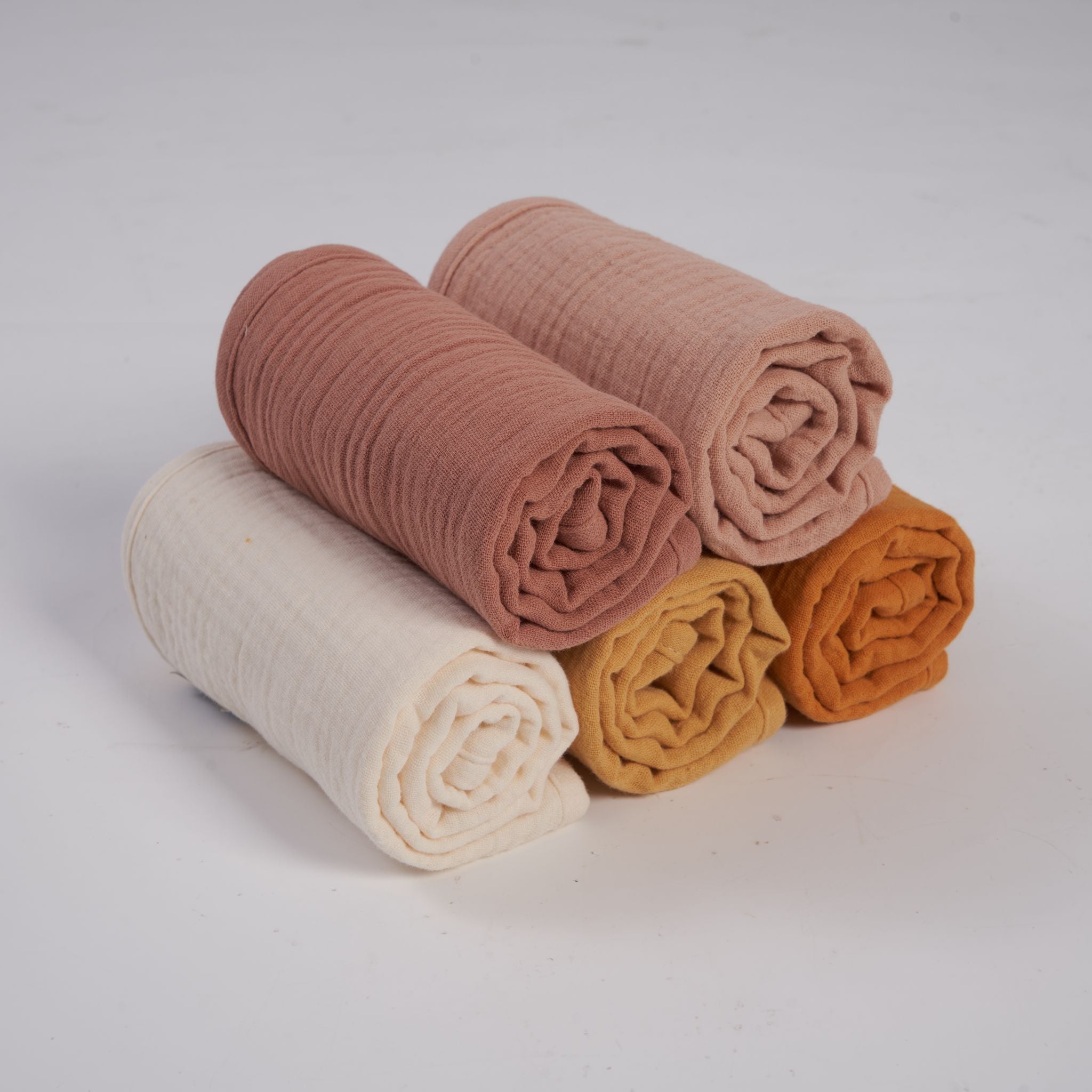
Swaddling recreates the snug feeling of the womb and can help settle a newborn who startles easily. Use a muslin wrap that is large enough to wrap securely. A 120cm x 120cm size is a reliable minimum. Look for organic cotton or bamboo muslin, which softens with every wash and breathes well against newborn skin.
Important: swaddling must stop as soon as your baby shows any signs of rolling, typically from around four months. Once a baby can roll, their arms need to be free to push up if they end up face down. If you are unsure, check Red Nose Australia's swaddling guidance before continuing.
Sleeping Bags: From 4 Months Through Toddlerhood
Sleeping bags are zipped or buttoned bags that encase your baby from shoulder to toe. They are the safest option once swaddling ends and work brilliantly right through toddlerhood. A fitted sleeping bag removes the need for any loose blankets in the sleep space, which is exactly what Red Nose Australia recommends.
What to look for when buying a sleeping bag:
- Neck and armhole fit: The opening should be snug enough that your baby cannot slip down inside the bag. Armholes should allow natural movement without being loose enough to put their face at risk.
- Zip design: A two-way zip that opens from the bottom makes late-night nappy changes much easier without fully disturbing a sleeping baby.
- Size and longevity: A 0 to 18 month size offers excellent value. Check the weight range listed on the bag, not just the age, as babies vary significantly in size.
- TOG rating: Clearly labelled and matched to your climate. See the TOG guide above.
- Washability: Bamboo and organic cotton both wash beautifully on a gentle cycle. Avoid high heat drying, which can shrink fabric and weaken fibres over time.
Comforters and Security Blankets: From 12 Months
Comforters are not safe inside the sleep space for babies under 12 months. Red Nose Australia is clear on this. Once your baby reaches 12 months, a small comforter or security blanket can become a wonderful part of the settling routine and a genuine source of comfort during transitions like starting childcare or moving to a toddler bed.
Our Goose Comforter Baby Security Blanket in Parchment is a beautifully soft companion that many families introduce at this milestone age. It is also a lovely gift option for first birthdays, particularly for parents who are starting to transition away from the sleeping bag.
Building a Practical Organic Sleepwear Collection
You do not need a vast wardrobe of sleepwear. A practical collection keeps things simple and ensures you always have a clean option ready.
- Newborn to 4 months: Two to three muslin swaddles. One or two short-sleeve bodysuits and one long-sleeve option for layering. A 0.5 or 1.0 TOG transitional swaddle bag if you want to start introducing a sleep sack shape early.
- 4 to 12 months: Two sleeping bags in the right TOG for your climate. Having two means you always have a clean one while the other is in the wash. A few long-sleeve and short-sleeve bodysuits for layering underneath.
- 12 months and beyond: A sleeping bag in a toddler size if your child still uses one, a comforter for settling, and footed pyjamas or a long-sleeve top and pants for nights when a sleeping bag is no longer preferred.
Buy for your actual climate, not just the season on the calendar. A baby in Brisbane in July may need a 1.0 TOG sleeping bag and a short-sleeve bodysuit. A baby in Melbourne in July likely needs a 2.5 TOG bag and a long-sleeve footed onesie underneath. Room temperature is your guide, every time.
A Note on Safe Sleep and Australian Standards
Safe sleep guidelines exist to reduce the risk of sudden unexpected death in infancy (SUDI), which includes SIDS. The fundamentals have not changed, but it is worth revisiting them regularly as your baby grows and their sleep environment evolves.
The core safe sleep principles from Red Nose Australia:
- Always place baby on their back to sleep, from birth.
- Keep the sleep space clear. No pillows, loose blankets, cot bumpers, or soft toys for babies under 12 months.
- Use a firm, flat, well-fitting mattress in an approved cot or bassinet.
- Keep baby's face uncovered during sleep.
- Avoid overheating. A sleeping bag with an appropriate TOG rating helps regulate temperature without the risk of loose bedding covering the face.
For product safety standards specific to Australian baby sleep products, the Australian Competition and Consumer Commission's product safety guidelines are a reliable reference point for what to check before you buy.
Organic baby sleepwear is a long-term investment in your baby's comfort and your own peace of mind. Choose fabric you trust, a TOG that suits your climate, and a fit that keeps your baby safe through every stage of their sleep journey.