

Cot fitted sheet size trips up a lot of new parents. Most standard Australian cots take a fitted sheet of around 130 x 70 cm, but mattress thickness varies between brands, and that depth measurement matters just as much as the length and width. Get it wrong and the sheet pops off the corners overnight. That is annoying at best and a safety issue at worst.
Part of our complete guide to waterproof cot sheets.
This guide covers how to measure your cot mattress correctly, how to fit a sheet so it stays put all night, and what to check before you close the nursery door.
Standard Cot Sheet Dimensions in Australia
Australian cot mattresses follow a general standard, but there is more variation than most people expect. Here are the most common sizes you will come across.
- Standard cot: mattress approximately 130 x 69 cm, depth typically 8 to 15 cm
- Compact or travel cot: mattress approximately 95 x 65 cm, depth typically 5 to 8 cm
- Cot bed (converts to toddler bed): mattress approximately 140 x 70 cm, depth typically 10 to 15 cm
So are cot sheets a standard size? Broadly yes, but not precisely. A sheet labelled "fits 130 x 70 cm" may not fit a thicker mattress correctly. Always check the pocket depth on the sheet, not just the surface dimensions.
How to Measure Your Cot Mattress Before Buying Sheets
Grab a tape measure before you shop. You need three numbers: length, width, and depth.
- Measure the length and width across the top of the mattress from edge to edge.
- Measure the depth from the top surface straight down to the base.
- Add the depth measurement twice to both the length and width figures. That gives you the minimum flat fabric size the sheet needs to cover.
- A sheet with a pocket depth of at least 15 cm will fit most Australian standard mattresses comfortably.
If you are unsure, size up on pocket depth rather than down. A slightly deeper pocket will stay tucked. A shallow one will not.
Why Sheet Fit Is a Sleep Safety Issue
A loose sheet in a cot is not just inconvenient. It is a hazard. Red Nose Australia recommends keeping the sleep environment firm, flat, and clear of loose bedding to reduce the risk of sleep-related infant death. A fitted sheet that pops off the corners becomes loose bedding.
The Australian Competition and Consumer Commission (ACCC) also advises that cot mattresses and bedding should fit snugly with no gaps at the sides. If you can fit two fingers between the mattress and the cot frame, the mattress is too small. The same principle applies to sheets: if the fabric bunches or lifts, it is not the right fit.
Getting the sleep setup right is one piece of the puzzle. If you are also thinking through your full nursery layout and styling, our guide to beautiful nursery styling for Australian homes has practical ideas worth bookmarking.
How to Fit a Cot Sheet Properly
Even a correctly sized sheet needs to be put on well. Here is the method that works.
- Start at one corner. Hook the fitted elastic firmly under the mattress corner.
- Move to the diagonally opposite corner next, pulling the sheet taut before tucking.
- Do the remaining two corners last.
- Run your hand across the surface. The sheet should feel smooth and firm, with no slack in the centre.
- Check all four corners are fully hooked under the mattress, not just resting on the edge.
If the sheet keeps lifting, the pocket depth is likely too shallow for your mattress. That is a sign to try a deeper-pocket option, not to push the same sheet back on and hope for the best.
What to Look for in a Cot Fitted Sheet
Beyond size, a few practical details separate a good sheet from one that causes problems.
- Pocket depth: Look for at least 15 cm. Some brands list this clearly, others do not. If it is not listed, ask before buying.
- Elastic coverage: All-around elastic holds better than corner-only elastic, especially through washes.
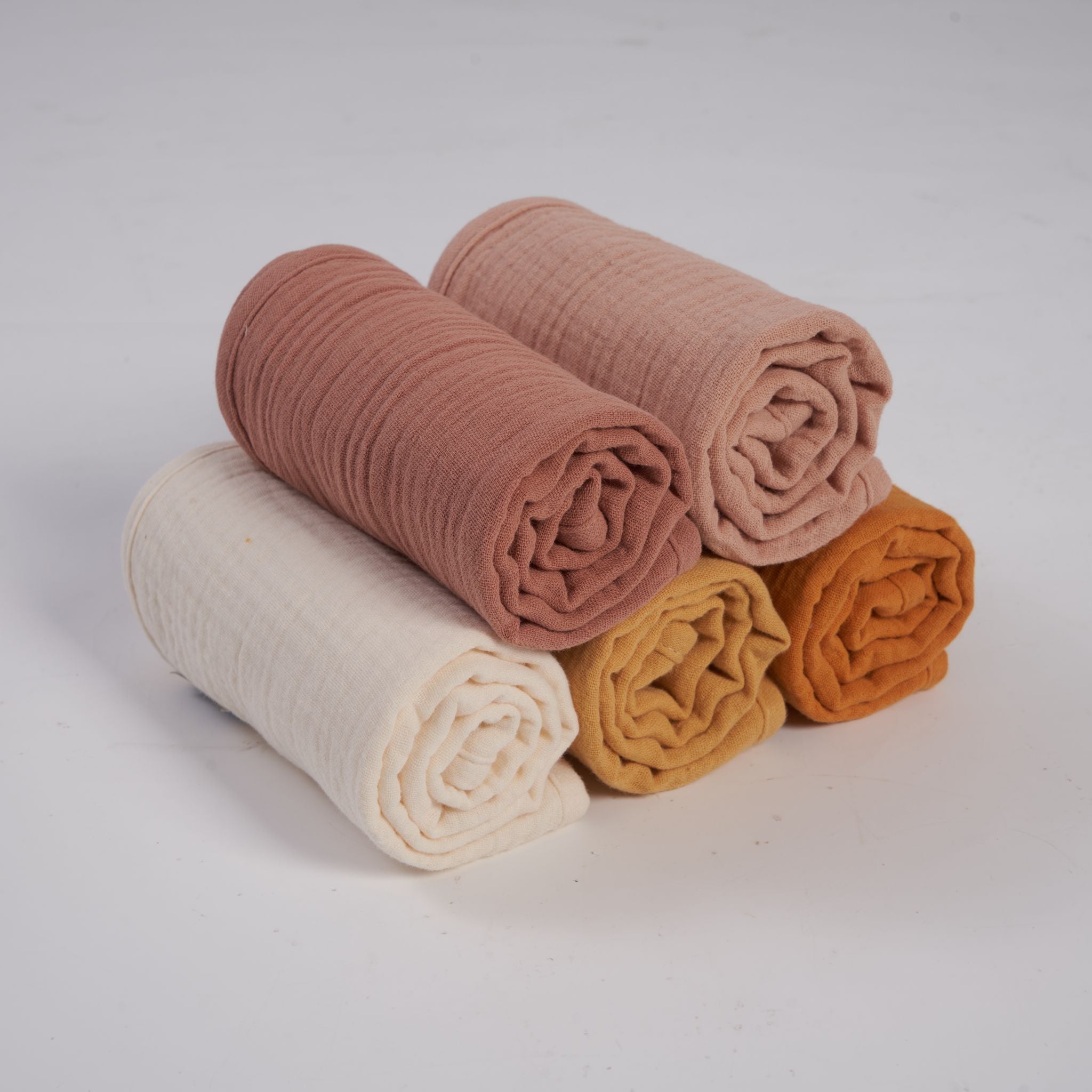
- Fabric: Cotton muslin and bamboo blends are soft, breathable, and moisture-wicking, which matters for a baby who sleeps in close contact with the fabric all night. See our full range of baby and nursery essentials for options in both.
- Wash performance: Sheets go through a lot of washing. Check that the elastic retains its stretch after repeated cycles.
It is worth having at least two or three fitted sheets on hand so you are never scrambling at midnight. Night feeds, nappy leaks, and posseting mean sheets change more often than you expect in the early months.
If you are putting together the full sleep and nursery kit, our guide to choosing the right baby nightwear covers what your baby actually needs to wear to sleep safely and comfortably at different ages. And if wraps and layers are on your list too, this comparison of swaddles, nursing covers, and blanket wraps will help you sort out what does what.
Ready to shop? Browse the full Zoe Sage range including fitted cot sheets, muslin wraps, and everything else for the nursery.