



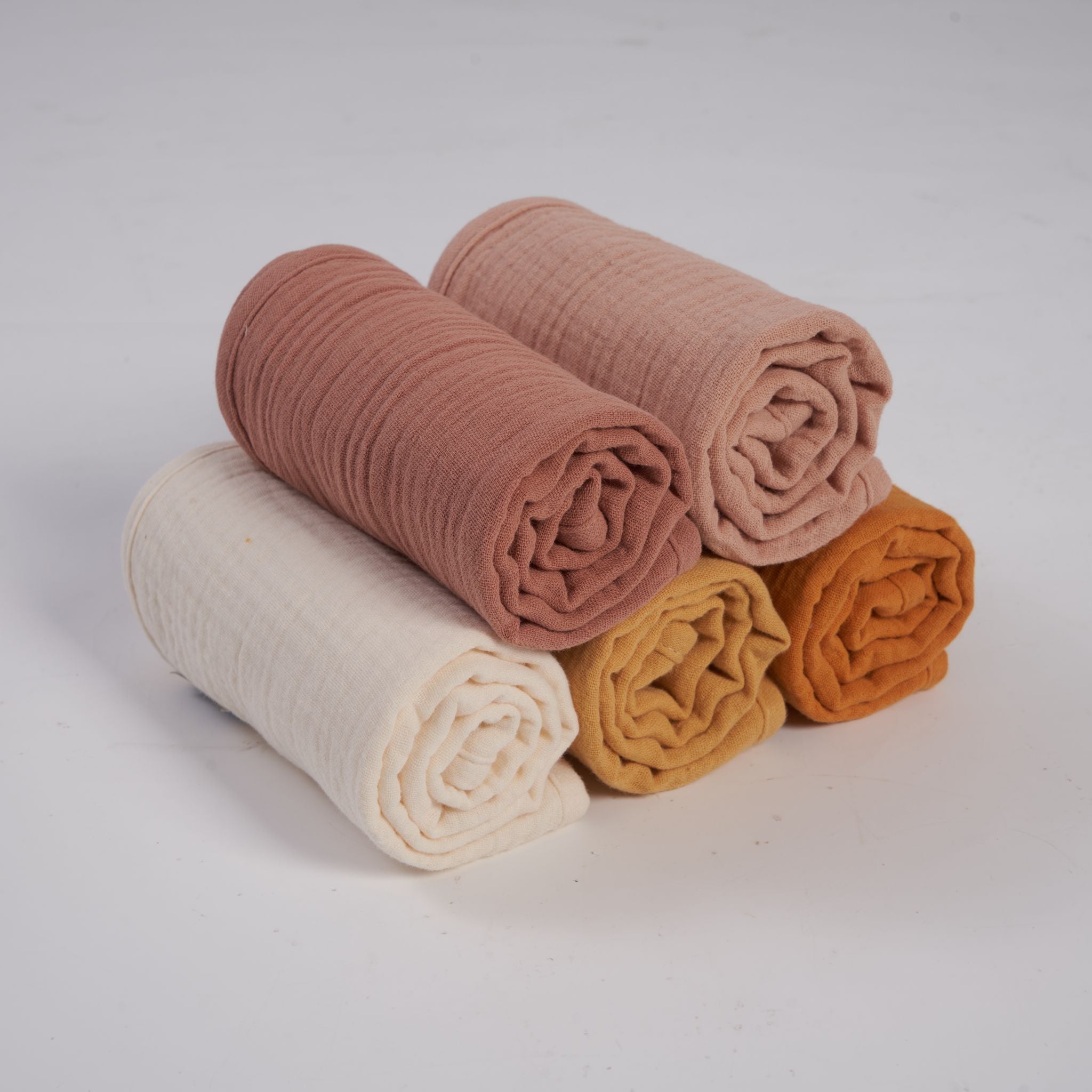

Sheet corners keep coming off your cot? You are not alone, and it is not just annoying. A sheet that bunches, pops off a corner, or rides up overnight is a genuine sleep safety issue. Loose bedding near a baby's face increases risk during sleep. The good news is the cause is almost always one of five fixable things: wrong fit, shallow pockets, layer slippage, poor fitting order, or worn elastic. Work through the checks below and you will sort it fast.
Part of our complete guide to waterproof cot sheets.
For safe sleep guidelines specific to Australian families, Red Nose Australia's safe sleeping advice is the best place to start.
Why Sheet Corners Keep Coming Off
Most cot sheets are not designed badly. They fail because of a mismatch between the sheet and the mattress. Cot mattresses vary more than people expect. Two mattresses labelled "standard" can differ by several centimetres in thickness. A sheet sewn for a 10 cm mattress will pop off a 13 cm one every time.
Elastic also degrades. After repeated washing and stretching, the elastic in a sheet loses its grip. If your sheets are more than 12 to 18 months old and the problem has gotten worse, the sheet itself is likely the issue, not how you are fitting it.
A waterproof mattress protector underneath adds extra bulk and extra slippage. If you stack multiple layers, that height can push the sheet past its limit.
Five Checks to Stop Your Sheet Popping Off
1. Measure your mattress before buying sheets
Measure length, width, and depth. Then check the sheet's listed dimensions against all three. Most Australian standard cot mattresses are 130 x 69 cm, but depth varies from 8 cm to 15 cm. A sheet needs at least 25 cm of fabric beyond the mattress surface to wrap underneath and hold.
2. Check pocket depth, not just length and width
Pocket depth is the measurement from the top of the sheet down into the corner pocket. Many budget sheets have 15 to 18 cm pockets. That works on a thin mattress. On anything over 10 cm, you need a pocket depth of at least 25 cm. This single spec makes the biggest difference.
3. Fit the sheet before adding layers
Put the fitted sheet on the bare mattress first. Pull each corner down firmly before moving to the next. Work diagonally, not corner to corner on the same side. Then add your waterproof mattress protector on top of the sheet if you are using one, or underneath if it is the fitted style. Adding layers in the wrong order is a very common cause of overnight slippage.
4. Reduce layer bulk where possible
Every layer adds height. A thick foam mattress, plus a thick protector, plus a thick sheet can push the total depth beyond what the sheet was made for. Choose a slim-profile mattress protector, or a waterproof fitted sheet that combines both functions in one layer.
5. Replace elastic that has lost its grip
Hold the corner of your sheet and stretch the elastic. It should snap back quickly with real resistance. If it feels loose or limp, the sheet needs replacing. No amount of careful fitting will fix dead elastic. This is especially common in sheets washed frequently on warm cycles.
What to Look for in a Fitted Cot Sheet That Actually Stays On
Look for deep corner pockets of 25 cm or more. Check that the elastic runs all the way around the sheet, not just at the corners. Corner-only elastic is the main reason budget sheets fail. All-around elastic distributes tension evenly and holds across the full perimeter.
Fabric matters too. A softer, slightly stretchy knit fabric conforms to the mattress corners better than a stiff woven fabric. Bamboo and organic cotton jersey sheets tend to grip well and stay put. If you are packing sheets for daycare or travel, our cot sheet and bedding pack list for daycare and travel covers exactly what to bring and how to keep things organised across multiple sleep environments.
Safety First: Why This Matters Beyond the Frustration
A sheet that comes loose is not just a middle-of-the-night nuisance. Loose bedding in a cot is flagged as a hazard in Australian safe sleep guidance. Raising Children Network's safe sleep guide recommends keeping the sleep environment firm, flat, and free of loose fabric. A well-fitted sheet that stays put removes one variable from the equation.
If your baby is transitioning out of a swaddle around this time, getting the sleep setup right matters even more. Our guide on moving from a swaddle to a sleep bag covers timing and what to watch for.
And if you are also figuring out whether your baby is ready to move up a size in their sleepwear or daywear, our guide on knowing when to size up in baby clothes will help you avoid buying ahead too early.
Quick Summary
- Measure mattress depth, not just length and width, before buying sheets.
- Choose sheets with all-around elastic and pocket depth of at least 25 cm.
- Fit the sheet diagonally and layer correctly to reduce slippage.
- Replace sheets when elastic loses its snap, usually after 12 to 18 months of regular use.
- Keep the cot clear of loose bedding for safe sleep every night.