Babies grow fast. One week a onesie fits perfectly, the next it is cutting into their little thighs. Knowing when to size up baby clothes saves you money, keeps your baby comfortable, and means fewer nights wondering why they are unsettled. Here is what to actually look for.
Why Baby Clothing Sizes Are So Confusing
Most baby clothes are labelled by age, like "0-3 months" or "6-12 months." The problem is that age labels are just a guide. Babies grow at wildly different rates, and baby clothing sizes vary by brand too. A size 000 from one label might fit like a size 00 from another. So if you are asking whether baby clothing sizes vary by brand, yes, they absolutely do.
Australian sizing uses numbers like 000, 00, 0, 1, and 2. These correspond roughly to age ranges, but weight and height matter far more than age when it comes to fit.
Here is a general guide to Australian baby clothing sizes:
- 000: 0 to 3 months, up to 62cm
- 00: 3 to 6 months, up to 68cm
- 0: 6 to 12 months, up to 76cm
- 1: 12 to 18 months, up to 86cm
- 2: 18 to 24 months, up to 92cm
Always check the brand's size chart. If a brand lists height and weight ranges, use those over the age label. This applies whether you are shopping for everyday basics, baby clothes for 6-12 months, or a special occasion outfit.
Clear Signs It Is Time to Size Up Baby Clothes
Do not wait until clothes are unwearable. Size up as soon as you notice any of these signs.
- Popper snaps on bodysuits are straining or will not close at the crotch
- Fabric is pulling tight across the belly or back
- The nappy area looks cramped or the nappy is being compressed
- Legs or arms look bunched up with no room to stretch
- Sock-style footie pyjamas are curling your baby's toes
- Your baby seems unsettled, especially during sleep
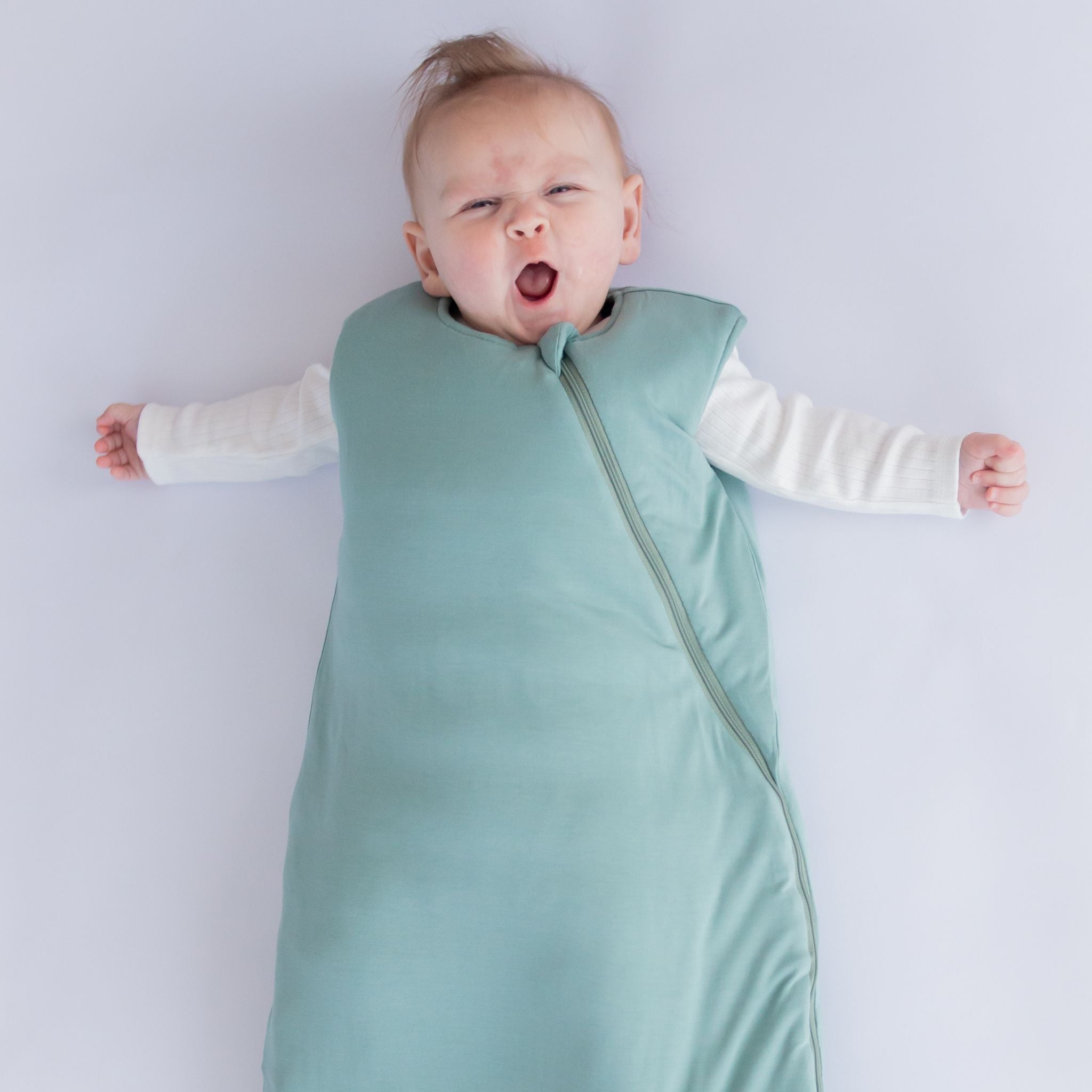
Tight clothing can restrict movement and affect sleep quality. If your baby is wriggling more than usual or waking frequently, check whether their clothes are too snug before assuming something else is wrong.
What Happens During Growth Spurts
Growth spurts are real and they happen quickly. Common windows are around 2 to 3 weeks, 6 weeks, 3 months, and 6 months. During these periods your baby may feed more, sleep differently, and visibly outgrow clothing in days.
During a growth spurt, your baby can jump a full size in just a couple of weeks. This is when parents are most caught off guard, especially if they just restocked a size they thought would last a while. Keep a few pieces in the next size washed and ready so you are not scrambling.
Comfort matters even more during these unsettled stretches. Layers that are easy to remove, soft fabrics that do not constrict, and the right-sized swaddle or wrap all help your baby feel settled. A well-fitted baby carrier can also be especially useful during growth spurts, keeping your baby close and calm while your hands stay free.
Should You Buy the Next Size Up in Advance?
Yes, within reason. Buying one size ahead is a smart move, especially for sleepwear and everyday basics. That said, avoid stocking up too far ahead. A drawer full of size 1 clothes is no use if your baby skips that size or barely wears it before the season changes. Buy a few pieces in the next size up, wash and have them ready, then assess as you go.
Newborn and 000 sizes are where most parents over-buy. Many babies arrive larger than expected and skip newborn sizing altogether. If you are pregnant and shopping ahead, buy mostly 00 and 0 rather than loading up on the tiniest sizes.
Special occasion outfits, like a Halloween costume, are worth sizing up deliberately. Costumes are often worn over a nappy and a layer of clothing, so they run snug. When choosing the right size for baby Halloween outfits or any dress-up piece, go at least one size larger than your baby's current everyday size.
How the 18 Month Size Actually Fits
The size 1 or 18 month clothes size is one of the trickiest. Some babies reach it at 10 months. Others are still in it past their first birthday. The label means very little on its own.
For size 1 or 18 month clothing, look for these measurements as your guide:
- Height: around 80cm to 86cm
- Weight: around 10kg to 12kg
If your baby is tall for their age, they may move into size 1 well before 12 months. If they are on the smaller side, size 0 may still fit comfortably past their first birthday. Go by the body, not the tag.
Tips for Getting Sizing Right Without Wasting Money
- Measure your baby's height and weight regularly and use brand size charts rather than age labels
- Choose clothes with adjustable features like fold-over cuffs or expandable necklines
- Prioritise fit in the torso and crotch area. Sleeves and legs being slightly long is fine and they will grow into it
- Keep tags on gifted clothing until you know the size will be useful
- Swap with other parents or buy secondhand for sizes your baby will pass through quickly
- Note which brands run small or large so you can adjust when reordering
The goal is clothes that let your baby move freely, sleep well, and go through nappy changes without a battle. When in doubt, size up. A slightly roomy fit is always better than a tight one.
A Quick Note on Maternity Sizing Too
If you are expecting and wondering whether tight clothes are bad during pregnancy, the short answer is that restrictive waistbands and tight fabrics around the belly are best avoided, especially in the second and third trimesters. They can cause discomfort, affect circulation, and make it harder to breathe deeply. Soft, stretchy fabrics and adjustable waistbands are your best friend throughout pregnancy, just as a good fit matters for your baby after they arrive.