
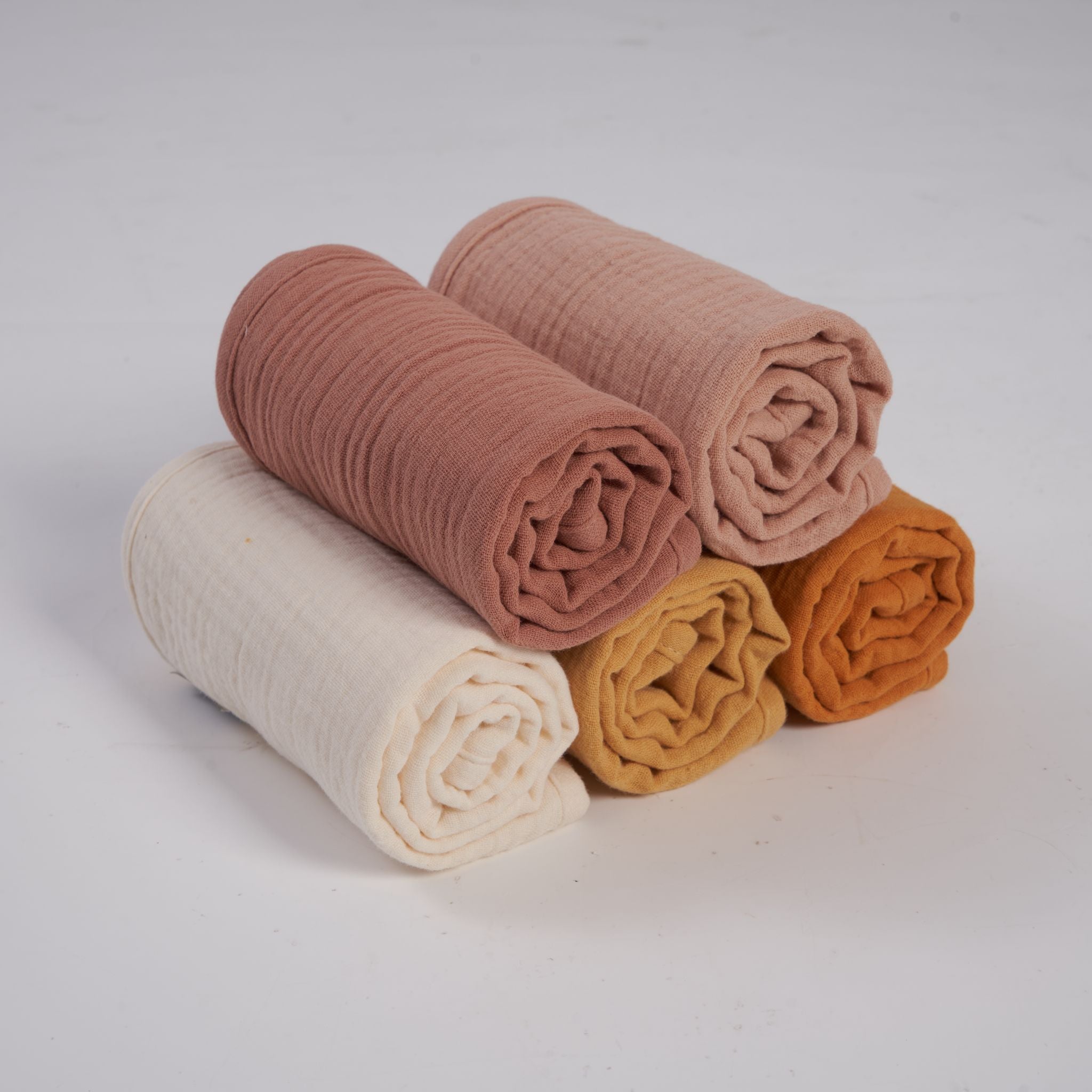


Waterproof bamboo cot sheets do a tough job. They guard the mattress against leaks, sweat and nappy blowouts while keeping your baby comfortable on a soft, breathable surface. Wash them the wrong way and that protection disappears fast. This guide shows you exactly how to wash, dry and store waterproof bamboo cot sheets so the waterproof membrane stays intact and the bamboo fabric stays gentle against your baby's skin.
Part of our complete guide to waterproof cot sheets.
New to waterproof bedding? Browse our waterproof cot sheets and protectors range to see what fits your setup.
Why Washing Method Matters
Most waterproof cot sheets use a laminated TPU membrane bonded to the fabric. That membrane is what blocks liquid from reaching the mattress. Heat, harsh detergents and fabric softener all degrade the bond over time. Once the membrane breaks down, the sheet looks fine but stops working. You end up with a wet mattress and no idea why.
Bamboo fabric also needs a little care. It is naturally soft, breathable and moisture-wicking, which is exactly what makes it comfortable for babies. Rough washing cycles can cause pilling and reduce that silky feel. A gentle approach protects both layers at once.
How to Wash Waterproof Bamboo Cot Sheets
Before You Start
Always check the care label first. If the label and this guide differ, follow the label. Every product varies slightly depending on fabric weight and membrane thickness.
Machine Washing
- Use cold or warm water only. Keep the temperature at or below 40 degrees Celsius.
- Select a gentle or delicate cycle. A slow spin speed reduces stress on the membrane.
- Use a small amount of mild, liquid detergent. Powder detergents can leave residue that clogs fabric fibres.
- Skip fabric softener entirely. Softener coats fibres and breaks down the waterproof layer faster than almost anything else.
- Skip bleach and whitening agents. They weaken both the bamboo fibres and the membrane bond.
- Wash with similar items. Avoid washing with zips, velcro or anything abrasive that could snag the fabric.
Hand Washing
Hand washing is perfectly fine and is the gentlest option. Use cool water and a small amount of mild detergent. Gently agitate the sheet, rinse thoroughly and press out excess water without wringing or twisting. Wringing stresses the membrane seams.
How to Dry Waterproof Bamboo Cot Sheets
Drying is where most people go wrong. Heat is the main enemy of waterproof membranes.
- Air dry wherever possible. Hang flat or over a wide rail so the sheet keeps its shape.
- Dry in the shade or indoors. Direct sun can degrade both the bamboo fibres and the membrane over repeated exposure.
- If you must use a dryer, select the lowest heat setting or an air-only cycle with no heat.
- Never tumble dry on high heat. One high-heat cycle can permanently damage the waterproof layer.
- Do not iron. The heat will melt or warp the TPU membrane.
In warmer Australian weather, air drying indoors usually takes just a few hours. Having two or three sheets in rotation means you are never caught short during the night. For help working out how many sheets you need and what sizes to buy, our cot and bassinet sheet sizing guide for Australia covers standard cot, bassinet and travel cot dimensions.
Stain Removal Tips
Treat stains promptly. The longer a stain sits, the harder it is to lift without aggressive products that damage the membrane.
- Rinse the affected area with cold water immediately after a nappy blowout or feed spill.
- Apply a small amount of mild liquid detergent directly to the stain and gently work it in with your fingers.
- Let it sit for five to ten minutes, then rinse before washing as normal.
- Avoid enzyme-based stain removers unless the care label specifically says they are safe. Some enzyme formulas break down the membrane over time.
Storing Waterproof Cot Sheets
Make sure the sheet is completely dry before folding and storing. Even slight dampness encourages mildew to form between the fabric layers. Store in a cool, dry place away from direct sunlight. Avoid compressing the sheet tightly for long periods, which can crease the membrane and create weak spots.
When to Replace Your Sheet
With proper care, a quality waterproof bamboo cot sheet should last through multiple children. Signs it is time to replace include visible peeling or cracking on the inner membrane, persistent odour that washing does not remove, or a wet mattress after a leak that the sheet should have caught.
If you are unsure whether a waterproof sheet or a separate mattress protector is the better choice for your situation, our article on waterproof cot sheets versus mattress protectors walks through the differences clearly.
Safe sleep is about more than just bedding. For current Australian safe sleep guidelines, Red Nose Australia provides evidence-based safe sleeping advice that every parent and carer should read.
Ready to stock up or replace a worn sheet? Shop our full range of waterproof cot sheets and protectors with free shipping across Australia.