

Wash cloths might seem like a minor detail when you're preparing for a newborn, but the fabric genuinely matters. Bamboo muslin has become a popular choice among Australian mums for good reason. This guide breaks down the real differences between standard muslin and bamboo muslin cloths so you can choose with confidence, whether you're shopping for your own bub or putting together a baby shower gift.
Why Newborn Skin Needs the Right Fabric
Newborn skin is thinner and far more sensitive than adult skin. It absorbs moisture and irritants quickly, which means harsh textures or synthetic fibres can cause redness and dryness faster than you'd expect. The fabric you use on their face and body during bath time is worth thinking about carefully.
According to Raising Children Network, newborn skin needs gentle handling and should be kept clean and dry to reduce the risk of irritation and rash. That starts with what you're using to wipe them down.
Standard Muslin vs Bamboo Muslin Cloths
Standard muslin is typically made from cotton. It's lightweight, breathes well, and softens with washing. It has been used for babies for generations and works well for many families.
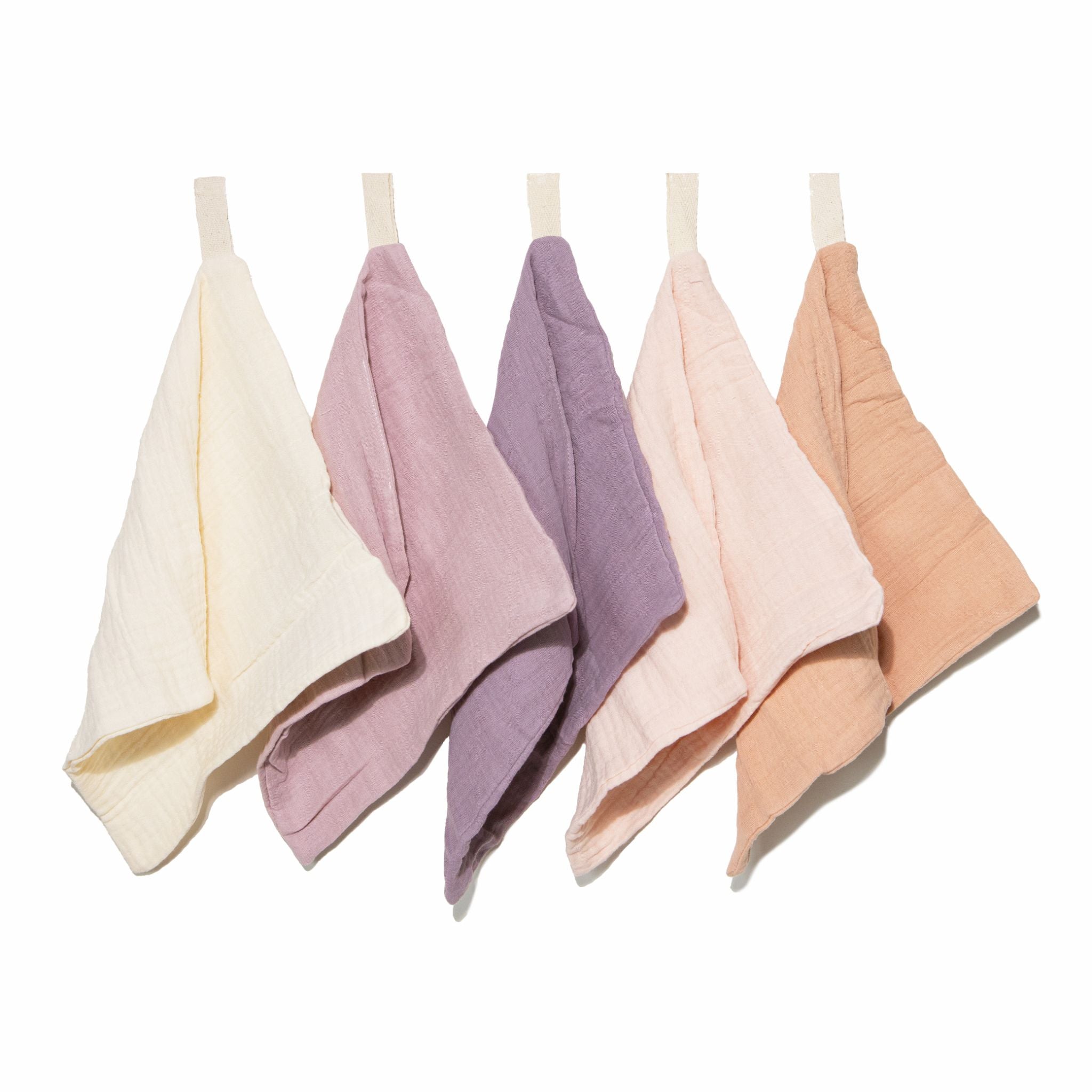
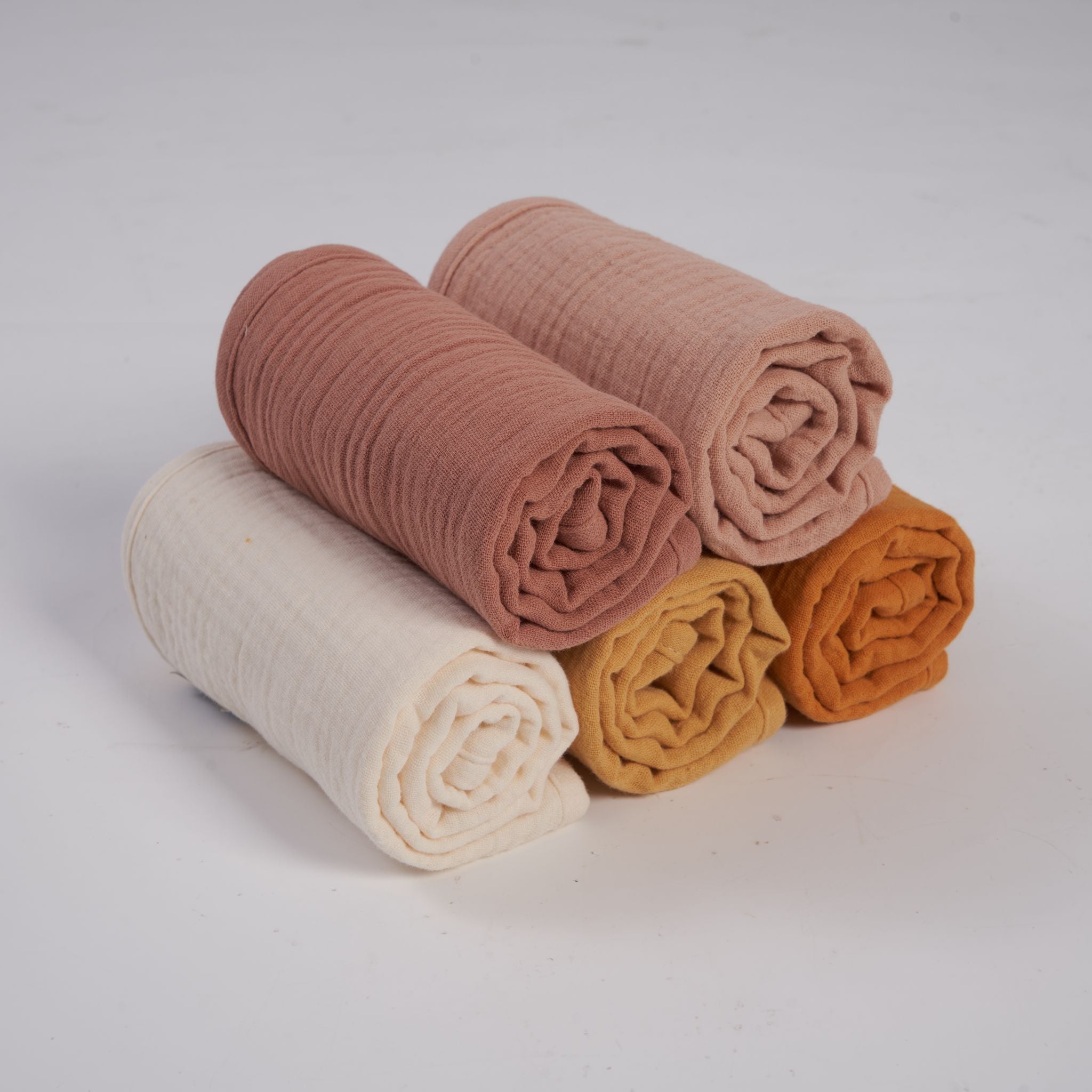
Bamboo muslin cloths are woven from bamboo-derived rayon or a bamboo-cotton blend in the same open-weave muslin structure. The key differences come down to texture, absorbency, and how the fabric performs over time.
Softness
Bamboo muslin has a distinctly silky feel compared to standard cotton muslin. Right out of the packet it feels noticeably smoother against skin. Cotton muslin softens well with repeated washing but takes longer to reach the same level of softness.
Absorbency and Moisture-Wicking
Both fabrics absorb well. Bamboo muslin tends to wick moisture away slightly faster, which is useful when you're doing a quick face wipe or cleaning up after feeds. It also dries more quickly between uses.
Breathability
The open weave of muslin in both versions keeps things breathable. You're not trapping heat against delicate skin. This makes muslin cloths better suited to Australian conditions than thicker terry-cloth alternatives.
Durability
Standard cotton muslin is very durable and holds up well through hundreds of washes. Bamboo muslin is soft but does require slightly more care. A cold or warm machine wash and air drying will keep bamboo muslin cloths in good condition for longer. Avoid high heat in the dryer as it can break down the fibres over time.
How Bamboo Muslin Cloths Are Actually Used
A good bamboo muslin cloth does a lot more than bath time. Here are the most practical ways to use them day to day.
- Gentle face and body wash during bath time
- Wiping around eyes, mouth, and nose between feeds
- Cleaning up spit-up quickly without roughing up delicate skin
- Dampening and placing on the forehead when bub is warm
- Using as a small swaddle layer for a newborn sleeping on you
- Packing in the nappy bag for on-the-go clean-ups
Having at least six to eight cloths on rotation makes sense. You'll go through more than you expect in the first few weeks.
What to Look For When Buying Bamboo Baby Wash Cloths
Not all bamboo muslin cloths are the same quality. Here's what to check before you buy.
- Fabric composition. Look for at least 70 percent bamboo in the blend for the softness benefit.
- Weight. A lighter GSM weave is better for face cloths. A slightly heavier weave holds up better as a general wash cloth.
- Stitching. Clean, flat-stitched edges won't scratch or irritate skin around the face.
- Colour safety. Choose cloths made with OEKO-TEX certified dyes or undyed natural fabric to reduce skin irritants.
- Size. A 30cm square is ideal for newborn face cloths. Larger cloths double up for body washing.
If you're building a complete gift set for a new mum, pairing wash cloths with coordinating muslin wraps or clothing in the same colour palette makes the gift feel considered and practical. Our guide to soft yellow baby sets is worth a look if you're after coordinated gifting ideas in gentle, nursery-friendly tones.
Caring for Bamboo Muslin Cloths
Bamboo muslin is easy to care for as long as you follow a few simple steps.
- Wash before first use to pre-soften the fabric.
- Use a gentle, fragrance-free detergent.
- Wash on a cool or warm cycle, not hot.
- Air dry where possible. If using a dryer, keep it on a low heat setting.
- Avoid fabric softener. It reduces absorbency over time.
Well-cared-for bamboo muslin cloths will last through the entire newborn and infant stage and beyond.
Which One Should You Choose?
If softness is your priority and you want cloths that feel silky straight away, bamboo muslin is the better choice for newborns. If you want maximum durability and a lower price point, standard cotton muslin does the job well and improves with every wash.
For many families the answer is both. A small set of bamboo muslin cloths for face and eye cleaning, and a larger set of cotton muslin cloths for general use, covers all the bases without overcomplicating things.
Whatever you choose, the open weave and breathable structure of muslin in either form is genuinely better suited to newborn skin than synthetic alternatives or heavy terry cloth. That much is clear.