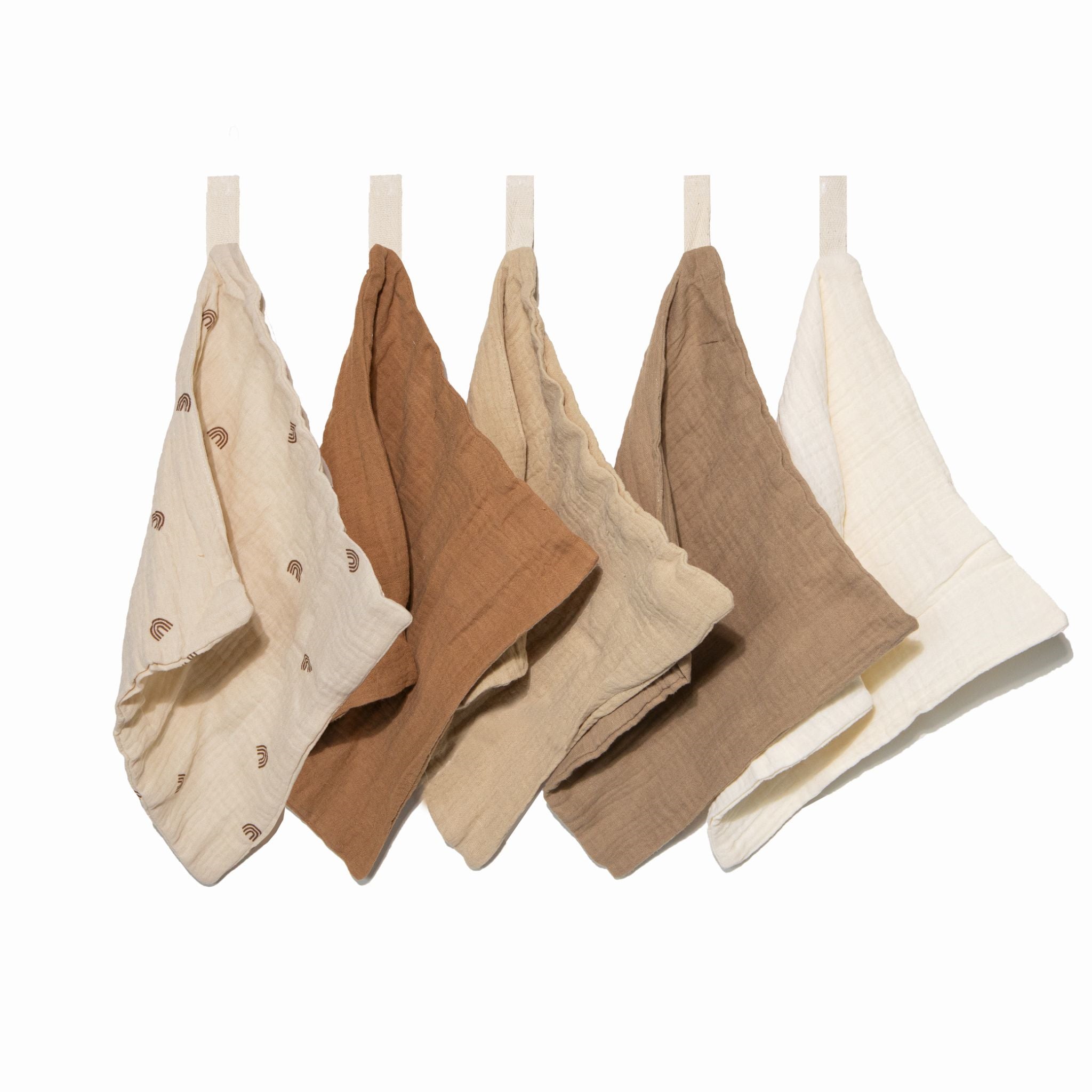

If you've spent any time in a baby store or scrolling through parenting groups, you'll know that swaddle wraps are one of those topics that can quickly spiral into overwhelm. Stretchy or muslin? Both? Neither? At Zoe Sage, we believe the best wrap is simply the one that works for your baby and your lifestyle. As an Australian brand built around premium organic essentials for newborns and toddlers, we've put a lot of thought into what actually helps families in those early weeks. This guide breaks down the real differences between stretchy and muslin swaddle wraps, so you can shop with confidence rather than guesswork.
Why Swaddling Matters for Newborns
Swaddling has been used across cultures for centuries, and for good reason. Wrapping a newborn snugly mimics the feeling of the womb, which can help settle an unsettled baby, reduce the startle reflex, and support longer sleep stretches. According to Red Nose Australia's guidance on safe swaddling, when done correctly, swaddling can be a useful tool for calming a newborn in the early weeks.
That said, safe swaddling technique matters just as much as the wrap itself. Red Nose recommends always placing a swaddled baby on their back to sleep, ensuring the wrap is firm but not restrictive around the chest, and leaving room for the hips and legs to move naturally. Once your baby shows signs of rolling, it's time to transition out of swaddling.
Now, onto the wraps themselves.
Stretchy Swaddle Wraps: What to Know Before You Buy
Stretchy swaddle wraps are made from a knit fabric, usually a jersey or ribbed cotton blend, that has natural give in all directions. That elasticity is what makes them so forgiving for first-time swaddlers, the fabric works with you rather than against you, so even an imperfect fold tends to stay in place.
The Benefits of Stretchy Wraps
- Easier to wrap: The stretch means you don't need to nail a precise fold. Great for 3am attempts with one hand and no sleep.
- Snug, consistent pressure: The fabric hugs the body gently without being pulled too tight, which many newborns find deeply settling.
- Stays put: Less likely to unravel mid-sleep than a flat muslin if technique isn't quite right yet.
- Soft against sensitive skin: A good stretchy wrap feels cosy and smooth against a newborn's delicate skin.
The Limitations of Stretchy Wraps
- Less breathable in warm weather: The denser knit fabric retains more heat, which can be a consideration during an Australian summer.
- Limited versatility: A stretchy wrap is really designed for swaddling. It doesn't double as a pram cover, nursing cover, or play mat the way a muslin can.
- Shorter lifespan: Once your baby is bigger and stronger, they can work their way out more easily and you'll transition to a sleeping bag sooner.
Zoe Sage's stretchy wraps are made from a soft cotton-spandex blend that provides just the right amount of give. The Stretchy Baby Swaddle Wrap in Sage Green and the Stretchy Baby Swaddle Wrap in Oat are consistently popular for their neutral, timeless tones that work beautifully for any nursery palette. If you're after something a little warmer and more vibrant, the Stretchy Baby Swaddle Wrap in Sunset is a stunning choice, particularly for autumn and winter babies.
If your newborn fusses and wriggles during nappy changes or getting dressed, you're not alone. Our article on what to do when your baby hates getting dressed has some genuinely helpful tips for making those moments calmer for both of you.
Muslin Swaddle Wraps: What to Know Before You Buy
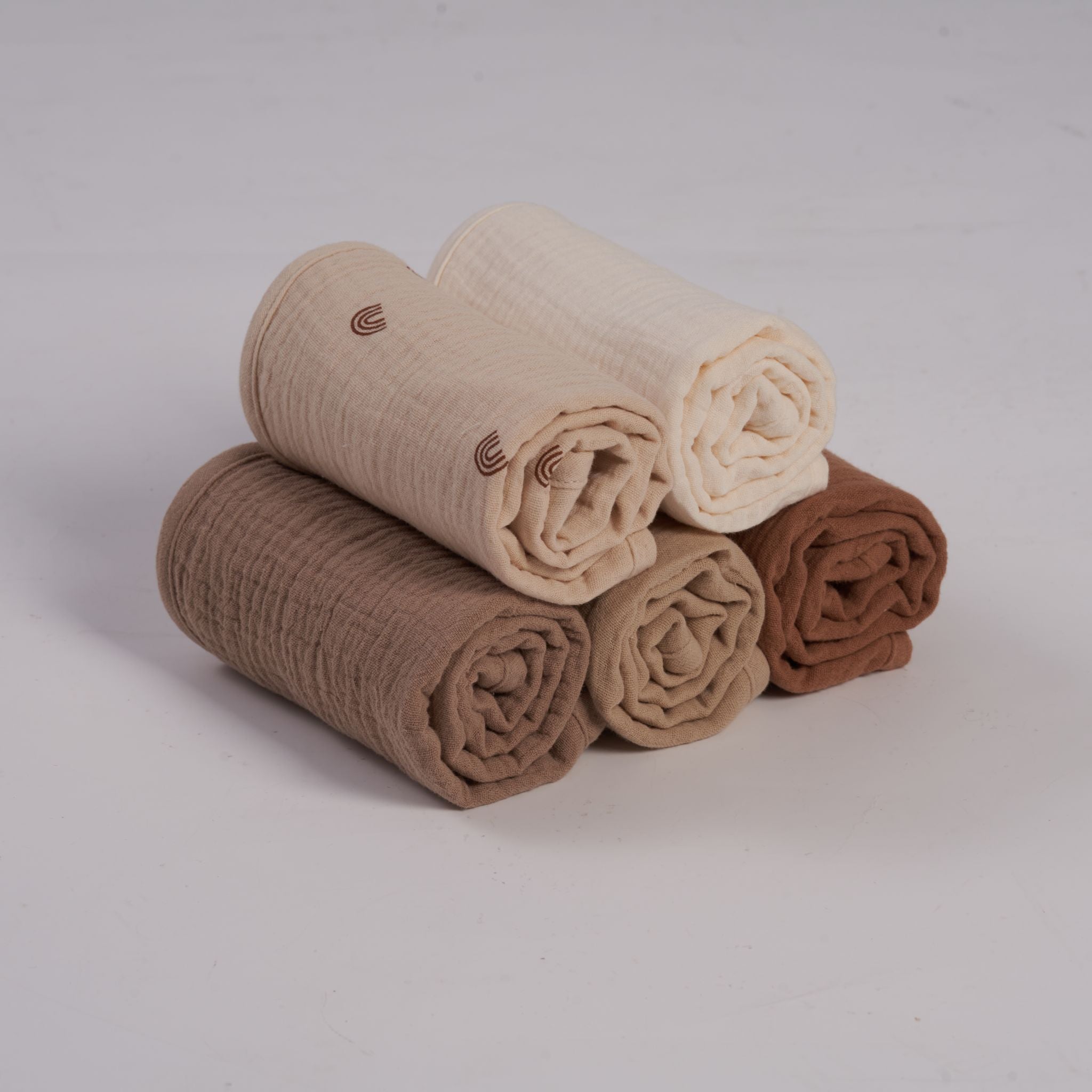
Muslin is a loosely woven cotton fabric that becomes softer with every wash. Unlike a stretchy wrap, muslin is a flat, woven fabric with no stretch, so it relies on folding technique to achieve a secure swaddle. That sounds more demanding, and it is initially, but most parents find they get the hang of it within a week or two.
The Benefits of Muslin Wraps
- Incredibly breathable: The open weave allows air to circulate freely, making muslin a smart choice for warm Australian summers or babies who run warm.
- Multi-purpose: A muslin wrap can be used as a pram liner, sun shade, nursing cover, burp cloth, change mat cover, or impromptu beach blanket. The versatility is genuinely impressive.
- Gets softer over time: Organic cotton muslin actually improves with washing, becoming more supple and lovely against the skin.
- Longer useful life: Even once your baby is past the swaddling stage, a muslin wrap keeps earning its place in the nappy bag.
The Limitations of Muslin Wraps
- Technique required: Without the stretch to compensate, a loose swaddle can unravel, which is both a safety concern and a frustration at 2am.
- Less settling for very active babies: Some strong, wriggly newborns can escape a muslin swaddle more readily than a stretchy one.
Zoe Sage's Organic Cotton Muslin Swaddle Wrap in Sage Green and the Organic Cotton Muslin Swaddle Wrap in Oat are crafted from certified organic cotton, making them a thoughtful choice for families prioritising natural fibres and reduced chemical exposure. The generous size means you have plenty of fabric to work with as you learn the fold.
Stretchy vs Muslin: How to Choose the Right One for Your Baby
There's no single right answer here, and honestly, many families end up with both types. But if you're trying to decide where to start, here are the buying criteria worth thinking through.
Consider Your Climate and Season
Australia's climate varies enormously. If you're in Queensland or having a summer baby in Sydney or Melbourne, breathability is a priority and muslin is going to be your friend. If you're in Victoria or Tasmania heading into winter, the added warmth of a stretchy wrap may be more comfortable for your newborn. Always check the room temperature and dress your baby appropriately underneath the wrap, and refer to Raising Children Network's swaddling guidance for safe temperature and layering advice.
Consider Your Confidence Level
First baby? Little to no swaddling experience? A stretchy wrap is genuinely more forgiving. The fabric does a lot of the work for you. If you've swaddled before or you're the type who enjoys learning a technique, muslin might suit you from the start.
Consider How You'll Use It
If you want one product that pulls double duty well beyond the newborn stage, muslin is the more practical investment. If you want something dedicated to those early settling weeks that is easy to use and reliable, stretchy is excellent value.
Consider Your Baby's Temperament
Strong, Houdini-style babies who seem to escape everything may stay settled longer in a stretchy wrap. Calmer babies or those who just need a light sense of containment often settle beautifully in muslin.
Buy Both if You Can
This isn't just a sales pitch. Many experienced parents will tell you that having both types on hand means you're covered for different situations. A stretchy for night settling and early newborn days, and a muslin for daytime naps, warmer days, and beyond. Explore our full range of organic newborn essentials, including wraps, clothing, and more, in our carefully curated newborn collection.
Planning your baby's wardrobe alongside your wrap choices is worth doing early. Our guide on building a minimal but practical baby wardrobe for winter will help you figure out exactly what you need without overbuying.
Frequently Asked Questions
How many swaddle wraps do I actually need?
Most families find that three to four wraps is a practical number. This allows for one in use, one in the wash, and a spare. If you're using muslin wraps as multi-purpose items, you might want five or six on rotation.
At what age should I stop swaddling my baby?
The general guidance from Red Nose Australia is to stop swaddling once your baby shows signs of rolling, which typically begins around two to four months. Always place a swaddled baby on their back to sleep and never leave them unsupervised on an elevated surface while swaddled.
Are organic cotton wraps worth the extra cost?
For many families, yes. Certified organic cotton is grown without synthetic pesticides or fertilisers, which means fewer chemical residues in the fabric. Given how much time a newborn spends wrapped against fabric, choosing organic is a reasonable and considered choice. Zoe Sage's muslin wraps use certified organic cotton for exactly this reason.
Can I use a muslin wrap in an Australian summer?
Absolutely. Muslin's open weave makes it one of the most breathable fabrics available for wrapping. In summer, dress your baby in just a nappy or a light singlet underneath, and use the muslin as a light, airy swaddle. Always monitor room temperature and your baby's comfort, and follow safe sleep guidelines.